Mad Musings
- Anathema: A Letter to the Quiet OnesEssay · author reading
- Coloring Outside the LinesEssay · author reading
In the following pages, you'll find the musings of a man who admittedly has—as I put it in one of my narrations— “half his heart buried beneath the prairie sod”. There is joy, sadness, and not a few tears. I hope you enjoy encountering them as much as I enjoyed remembering and writing them.
Enter A Place Called Alice
A prairie life remembered
Stories of a town that has nearly disappeared—and memories that refuse to.
Enter AliceNorth Dakota · remembered in weather, work, and distance
The Writing · Poem
I find myself once more
remembering those thens
that were of my life those years ago.
And per my habit
feel compelled
to put a pen to paper
chronicle my recollections.
I harbor no illusions.
It is no secret
that my memories are viewed
as through a lens tinted rose.
I have to say my friend
when I compare the thens of years ago
with what I see today
say what you will
I’ll choose my recollections
most any day.
Mac McMahon
The Land · Poem
I am the sea of grass
billowing in the wind.
I am Cottonwoods
guarding Prairie streams
I am the Canada Goose
winging my way to summer.
I am the Redwing
trilling my aliveness.
I am Willows
in a grassy ravine
I am a Meadowlark
defining the silence.
I am the Coyote
waiting.
I am the Prairie Dog
watching.
I am the Red Tailed Hawk
riding the thermals
in a blue enamel sky.
I am the Buffalo Common
vast
timeless
I hear the ghosts
of uncounted bison
whispering.
I shed tears with Crazy Horse and Sitting Bull.
I held the children of the Grapes of Wrath
to my ancient bosom.
Their abandoned homesteads
bleaching in the sun
skeletons of broken dreams.
I am the plains.
I am the Great Drift Prairie.
My primeval pastures
gone to cattle herds and wheat fields
To ranches and farms and towns
and pickup trucks and diesel fumes
and grain dust and cattle dung.
Elevators and oil derricks
silhouette my prairie sunset.
And if you look past the trappings of today
there are times even now
when if the light is right
you can see them still
the ghost herd
plying the waves
on the Sea of Grass.
The Land · Poem
Forthcoming in The Study, February 2027.
Alice Slough is two miles south of my home town give or take.
A mile long or so and half that wide about.
Ten foot deep in years that are wet
it’s a bowl of alkali with
a brackish puddle in the middle
in the dry.
Clouds of dust swirl in the wind
like an other worldly landscape
in a painting done by Dali.
A bluff thats likely sixty foot
is the shoreline on the north
and for eighty years it was the area garbage dump.
People pulled their trucks or wagons to the edge
tossed whatever they were tossing off the bluff.
Every now and again a crawler tractor
would push the garbage farther out
push it off the bluff.
I hunted rats out there when I was young
till I heard one time
“if you should see a rat, there’s a hundred others that you don’t”.
Gave me the creeps for sure
and I quit right then hunting rats.
They closed down that old dump
in nineteen seventy four or five
and most everything got buried.
There’s two, three, cottonwoods now
likely thirty feet
where the P.V. Grain and Feed
used to dump their tailings.
That always was the spot that was best
for hunting rats.
When I was ten or so
old Charlie Multz told me that the bluff
was a buffalo jump
a zillion years or so ago.
I wish sometimes I had a drill
like the ones that scientists use
to core the ice in Greenland.
I’d drill down in that old dump
find all sorts of things.
I’d find buffalo bones more than likely
and arrowheads and such at the bottom.
Alice Slough is a secret place of mine.
I suppose it’s hard to think of a place that size as secret.
It’s really just my secret privately I guess.
I’d haul garbage to that old dump
and be three hours gone.
I’d sit out there in that marsh
Redwings all around,
bobbing on their cattails,
singing just for me.
I’d sit so still
they’d come right to me.
so close,
that I could reach right out and touch them.
If I hold my head just right,
I can hear those Redwings yet today
as clearly as they were
more than half a century past.
There’s about a million ducks
in Alice Slough.
Mallards, Teal, Redheads,
and about a dozen others.
There’s Mud hens too.
Ducks and geese are good to eat,
but Mud hens?
My Grandpa told me,
“if you put a Mud hen in a pot,
and stew it for a week,
then throw away the bones and meat,
you could probably use the broth
for killing weeds.”
And then there are the Geese.
I love the Geese.
Brilliant Snows,
big buff and black Canadiens,
but my favorites
are the swans.
My incredible Trumpeter Swans.
“A thing of beauty is a joy forever “
wrote Keats
and as far as I’m concerned
he was writing about those swans.
I can’t not feel
a stirring deep inside
an almost reverence
at their presence.
When swans come swimming by,
crowds of geese and ducks
move aside
to let them pass.
Like Greta Garbo
walking down a crowded street
swans just seem indifferent
to their own magnificence.
I’d lay for hours watching them,
I’d try to climb behind their eyes
to see the world
the way they do.
You can always know,
hunters from out of state.
They’re the ones in camouflage.
A thousand shotgun shells
hanging from their custom made hunting vests.
They’re the ones with brand new trucks,
with foreign plates.
Boots from L.L.Bean,
that lace up to the knee.
They’re the ones with shotguns,
with inlaid silver filigree.
They’re the ones that look,
like pictures from a magazine
and are dumb as a box of rocks,
mostly.
Sixteen years I was,
that fall of nineteen sixty three.
The truck was shiny new,
a nineteen sixty four “Power Wagon.”
one of those fancy four wheel drives
with great big tires.
Foreign plates
Minneapolis.
“Just put the bag
in the corner of the box “
My Daddy said
of the groceries I was carrying.
I had to climb the hitch
to get up high enough.
There were no ducks in that box.
No Mallards.
No Teal.
There were no geese.
No Snows.
No Canadiens.
The five Trumpeter Swans
were something Truman Capote could write about
bright red blood splashed against the white.
Jet black beaks agape.
tongues forever silenced.
Slender three foot necks
stretched out parallel.
A bloody white musical staff,
on which the fates had penned,
a requiem from Tchaikovsky.
I heard
a rancher in Sentinel Butte,
bought the guns and truck
from Game and Fish.
“You can’t put a price on loveliness”
so the saying goes.
But those Trumpeter Swans cost those men
two thousand bucks a bird in fines.
You can’t mistake a swan,
for a goose,
if you’re smarter
than a box of rocks.
From the wagon road
in nineteen hundred and five,
to highway thirty-eight today.
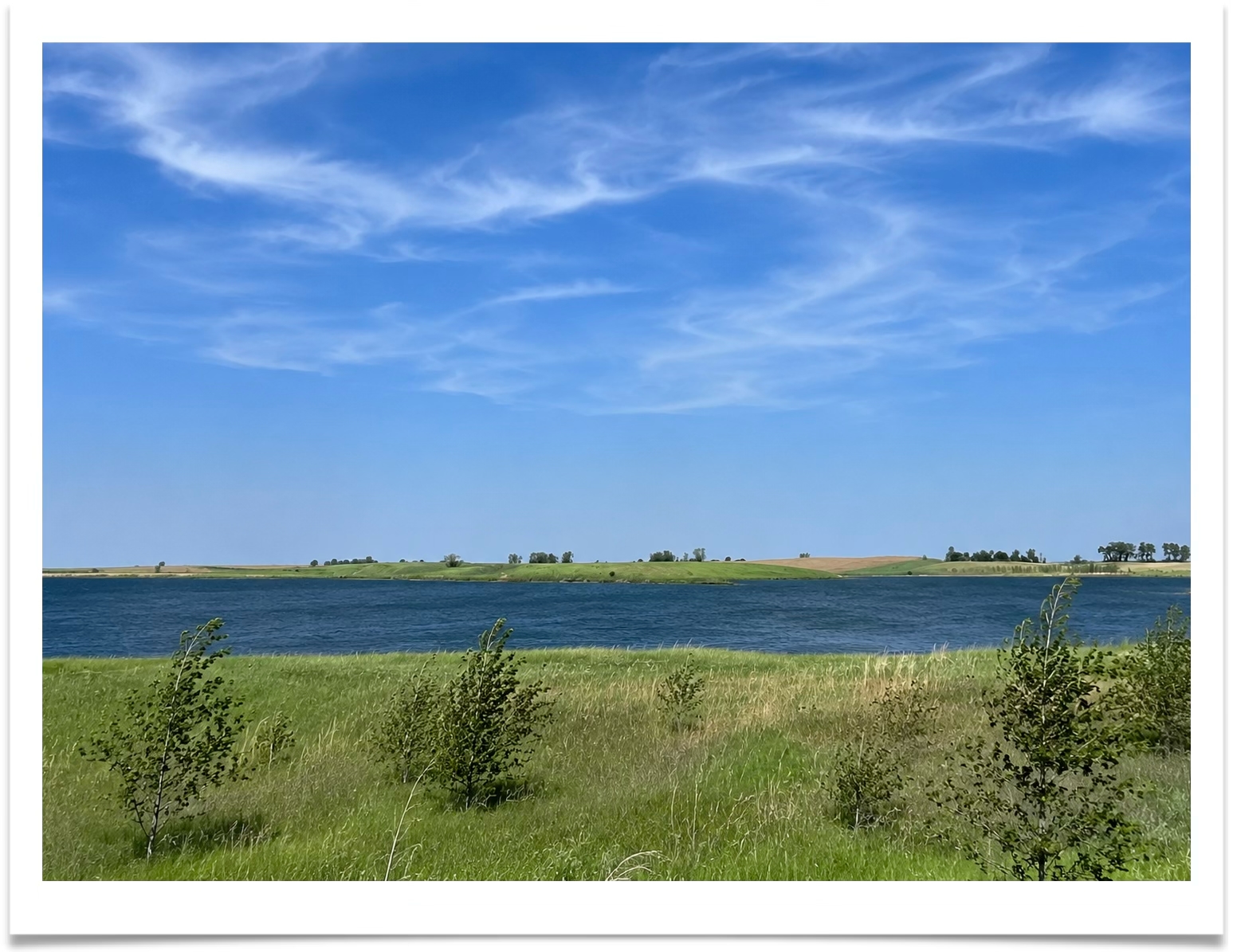
The picture of Alice Slough
looks pretty much the same.
It’s a game preserve these days
an honest to goodness
“Waterfowl Production Area”.
And this past summer,
the first in over forty years,
two pair of Trumpeters nested,
raised their broods.
And I never really realized
how much that they were missed,
till they came back.
And a piece of life
that had been absent,
returned to what it used to be,
at Alice Slough.
The Land · Poem
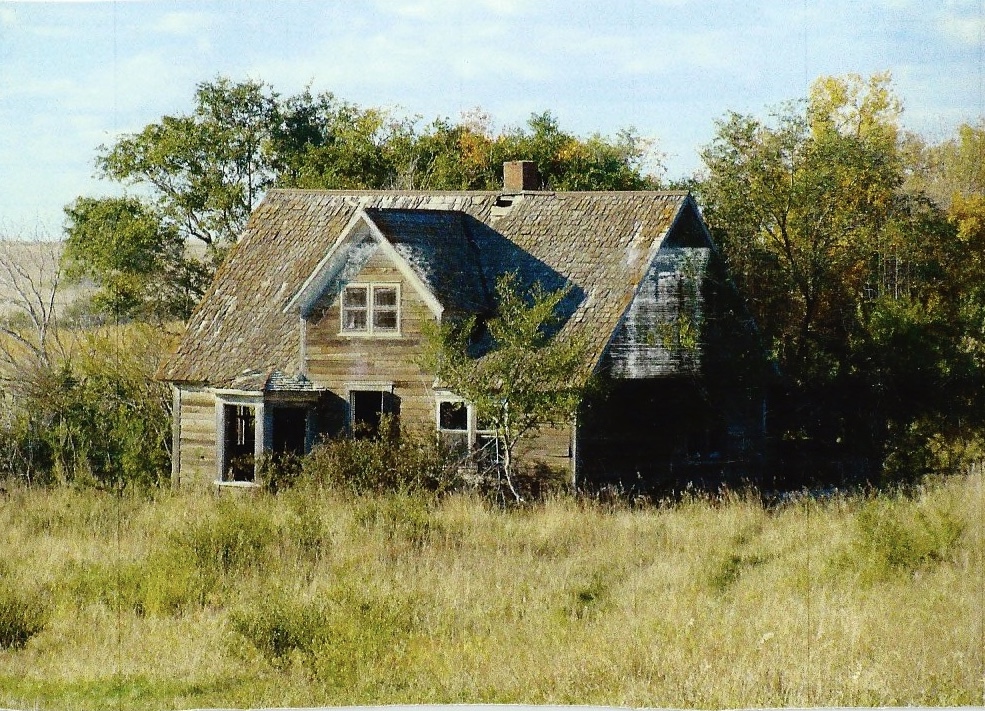
I see why they picked this spot
those people in that other then.
It’s one of those places on the plains
where it feels as if you’re standing
hand in hand with God.
The house they built still stands today
in the draw halfway up that prairie roll.
The window bays still jut
where the parlor used to be.
Denuded panes stare vacantly
at the line between the earth and sky.
Frozen here in time and space
thigh high grass wrapped around my knees
I’d swear that I can taste green and brown
on the prairie wind.
My Dakotah Wind lets me step outside the now
She seems to slow the world just for me.
I see her hand brush the trees in the draw
hear her whisper to the grass
as she climbs the prairie roll.
Yes, I see why they picked this spot
those people in that other then.
It’s one of those places on the plains
where it feels as if you’re standing,
hand in hand with God.
Prologue
As one of the very first “baby boomers,” I grew up in the North Dakotah of the nineteen fifties. I lived in Alice—a little prairie town that, like a lot of prairie towns, is mostly gone anymore.
It was a time before “God” got put into the Pledge of Allegiance, a time when portraits of Washington and Lincoln, and a copy of the Ten Commandments in Gothic script, had an honored presence on the walls at school, and World War II was still a part of the short-term memory.
It was a family legend that my Great Aunt Clara was supposed to have said, “Dat Hitler could’a come to Minneapolis, but by God he’s damn lucky he didn’t try to come into Nort Dekotah.”
Kids today would more than likely say our lives were boring. Our bicycles only had one speed, baseball bats were made of wood, and you had to check and see that no one else was on the line when you used the telephone that stuck up off the desk like in a 1930s movie. It was a time when finding that perfect slingshot crotch in the box elder trees behind the Alice hall was something worth remembering.
If someone would have used the words “play date” back then, they would have been looked at like they had two heads. We had to use imagination then. My horse—the one that was killed along with me in the charge up San Juan Hill with Teddy Roosevelt—was a lath I pulled from a snow fence down by the lumberyard. Yeah, we had a lumberyard too back then.
We were cowboys and adventurers and Visigoths and Vikings, and scientists and explorers, riding and running for miles into the country and back again, experiencing our world of farms and ranches, inhabited and abandoned; gravel pits and sloughs and creek beds and ravines; waving grass and wheat fields; and the occasional grove of trees under a sky so wide it defied explanation.
We didn’t know from wind chill charts back then. If it was cold… well, “you better bundle up, ’cause it’s a little breezy, don’chya know.” It was a time when walking backwards a half-mile to school to keep your face from freezing solid warranted not a second thought.
Being from the prairies, the wind was simply a fact of life. It never occurred to me that there might be places where it didn’t blow. I remember a time when I was ten or eleven and I saw a picture of a winter scene in New England, where the snow had piled up over a foot on the top of a rail fence. My first thought was that it was trick photography. Snow just doesn’t fall like that.
Goose down and Gore-Tex and four-wheel drive were concepts we hadn’t even imagined. A woolen cap with flaps over the ears, a heavy coat with a collar of imitation fur, and brogans underneath our four-buckle overshoes was high winter fashion in nineteen fifty-five North Dakotah.
I guess I never realized how unsophisticated we were. We were like some nineteen forties movie or a Norman Rockwell painting. And to tell the honest truth—
I miss it.
I miss the honesty, the innocence, the wide-eyed naïveté. We’ve got smartphones and iPads, digital cameras and computers. But we’ve lost our sense of joy, I think—our sense of wonder at it all. To tell the honest truth—
I miss it.
You see, for me, from my memory to my heart is…
A lyrical coda
Though I am alone
and far from there
I have them with me still
those things I love.
The Winter nights.
The Northern Lights.
Summer’s yellow green
the amber gold of fall.
And quiet.
Quiet so quiet
almost I feel
I am an interloper
in a foreign land.
When the crystal shard of a Meadowlark at song,
serves it seems,
only to define the silence.
When the haunting call of an austral bound Canada Goose
vibrates the very ashes of my bones.
And wind.
Wind that prowls a winter night.
Wind for whom power lines
like harp strings tightly strung
resonate in sympathy.
Wind that whispers
through the thigh high grass
in a reflection of itself.
Though I am alone
and far from there
I have them with me still
those things I love
because you see
it is a journey of no distance
from my memory to my heart.
The Weather · Poem
Cold
So cold the crystal air
Seems to flay the very skin
From my face…
So cold, my words fall to the ground in a silent heap
And the world is white and clear and sterile and stark
So cold…
So still…
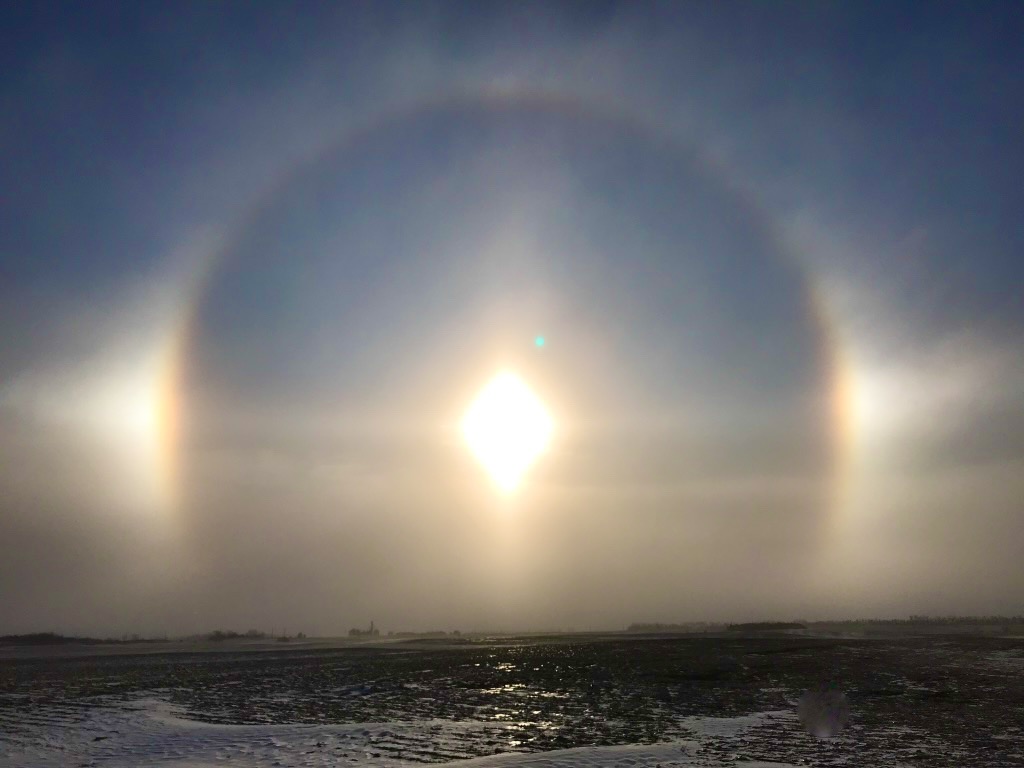
And the sun dogs…
Rainbow colors in the pale, watery light
Sun dogs
That shift and blend erupt and effervesce
In a kaleidoscopic dance of hues
Around a winter sun
Almost surreal
So cold…
So still…
The Weather · Poem
She’s alive you know
my Dakotah Wind.
She calls to me
knows my name.
And though I am an interloper
in this her land.
I can feel her speak
in a hundred different tongues.
I hear the surf rush to shore
in the Great Grass Sea
my Dakotah Wind
flowing over cottonwood shoals.
We’re intimate you see
my Wind and I
on a level difficult to comprehend.
I surrender to my Wind
on a scale for which there is no measure.
I view the world
through eyes not mine
I look back at me
upon my meager self
and sense that there is something deeper
something spiritual
in the power of her summer storm.
There is something deeper
something near divine
in the elemental force of her blizzard unleashed.
I sense that there is something more
a thing beyond simplicity
there is something in my Wind that’s Holy.
We’re intimate you see,
my Dakotah Wind and I,
on a level difficult to comprehend.
The Town · Poem
A face against the glass. Fifty years fall away.
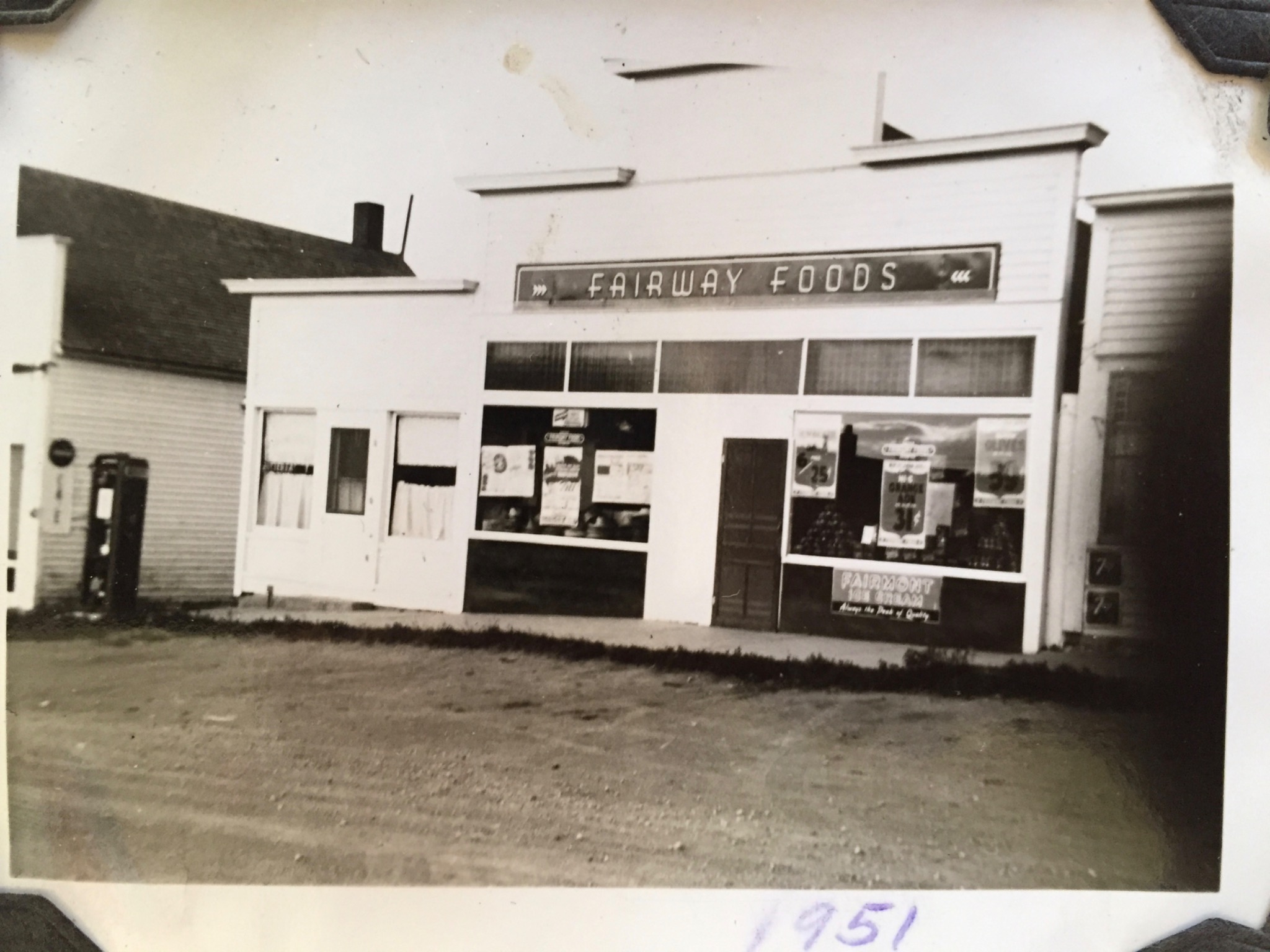
The plate glass windows of our old store
are a kind of time machine for me.
It hasn’t been a Fairway Foods for over fifty years
but I can put my face against the glass
shield my eyes with both my hands
and watch the Alice Fairway calendar
the one we gave away at Christmas time
change its month and day and year
to whenever fancy takes me.
It’s nineteen fifty two behind that glass right now,
and I can see my five year self leaning on the candy case
bibs of faded corduroy
with a neck to navel zipper in the front.
I got a Pluto picture on my t-shirt
and leather high top farmer shoes.
my hands are held behind my back listening to the talk.
My Momma’s words that children should be seen
and never ever heard
echo through my mind.
Beneath the milk white globe of the single light,
that hangs there over top the furnace grate
a group of local guys
sit on the slatted benches there
talking politics and baseball
and other grown up stuff.
Old Ezra’s there leaning on the counter
he’s the one that calls me ‘Zip’
On account of that zipper in my bibs.
Ezra chews a lot of snoose
that dribbles down the corners of his chin
and when he talks he sounds like Gabby Hayes.
Ezra’s farm was on the way to Grandpa’s place.
Only just an open field there now
where the house and barn
and twenty acre grove used to be.
Big Russ is holding court today
he stretches out his heavy frame
rests his ankles on a crate that’s meant for eggs.
His twelve ounce Pepsi bottle loosely gripped
propped up against his big old belly
every inch of which is bought and paid for
so he says.
Russell is an expert
on anything you ever heard of
and a whole lot probably that you haven’t.
That’s the way it sounds at any rate
to hear him talk.
If there’s a thing that he’s not sure of
it’s for sure he’d not admit it.
Then again if Russell drops the verbal ball
Frankie’s there to pick it up and run with it.
When either one is at a loss
They sort of act as seconds for each other
in the never ending game of words.
Frankie used to run the Farmer’s Grain
he never was formally accused I guess
for those years the books had failed to balance.
Now he mows the grass in our town
has a riding mower we kids think is great
‘cause most of us still mow by hand.
When Frankie’s out there mowing
He wears a hat that’s really cool
My Daddy told me it’s a ‘Pith’
and I thought that he was using nasty words
till I saw the movie ‘Gunga Din’
Frankie was a lot like Russ
Though he might not have a clue about it
He’d talk on any subject that came up.
My Daddy said
‘If you gave old Frankie half an inch’
He’d try to drive an NP locomotive through it.
Frankie’s favorite thing to talk about?
Without a doubt was baseball.
And until the team for Alice finally folded
He’d been an Alice Angel almost forty years.
After twenty four losing seasons
consecutive
the Angels finally called it quits
when only two men showed for practice
in the spring of nineteen fifty two
Frankie who’d been the pitcher over thirty years
and a younger fella named Duane
who probably hadn’t heard about the losing streak.
The other players said they had to quit
twenty four losing seasons was bad enough
but to take the chance of it becoming twenty five
to take the chance on a ‘Quarter Century’ losing streak
was too horrible to comprehend.
So anyway when Frankie starts on baseball
My Daddy says ‘He’d lay me odds’
it’s gonna finally come around
to the last time that
the Angels had a winning season
nineteen twenty seven.
That’s the year that Frankie pitched
that almost nearly shut out
in the playoff game
against the mighty Indie’s
of Enderlin North Dakotah.
A game at night it was
the only lighted park
for a hundred miles around was Hendrickson
the park the Indie’s call their home.
The score was tied nothing all
in the bottom of the tenth
when the Indie’s center fielder Carl Lindeman
stepped up to the plate.
They called old Carl ‘Cottonwood’
And it wasn’t hard to figure
why they named him for a tree
him being six foot six and all.
I don’t know for sure how heavy Cottonwood was
but they said they had to weigh him
at the Cargill Feed And Seed
on a scale that they use for grain.
It was the fifth at bat for Cottonwood
Frankie’d struck him out each time before
when Carl had swung so hard
at Frankie’s change up pitch
people said it looked like Cottonwood
would screw himself right into the ground.
There was a big typhoon
in the Dutch East Indies
a week or so following the game.
The swags at ‘Friendly Sticks’
the pool hall down in Enderlin
allowed as how the wind from Carl’s bat
might have been a factor in that storm
from the Butterfly effect and all.
So there it was
the bottom of the tenth.
Maybe Frankie got complacent
having struck old Carl out
in four at bats that night
or maybe Frankie just got tired.
Frankie says old Cottonwood got plain dumb lucky.
When he hit that change up pitch so hard
he whacked the cover off
broke the light out from the tower
above the fence in centre field.
The longest homer ever
in the history of that field.
A teacher at the school was heard to say
if it hadn’t hit the light
it would have gone
five hundred feet and more.
Some of the ‘Boys’ in the stands
sharing a brew... or two.... or three...or nine.
Home brew it was a’course, it being prohibition and all.
Some of those ‘Boys’ allowed as how they doubted
that that ball would’a ever landed at all
on account of it was still going up
when it hit the light.
And until the day he passed
old Frankie talked to anyone who’d listen
about how lucky Cottonwood was
on a summer Saturday evening
in nineteen twenty seven.
And as I peer through all the dimness
through fifty years of blurring window glass
At the five year old leaning on the candy case that’s me.
I see and hear and smell,
Those sights and sounds and odors,
That he takes for granted in his world.
The nutty brown aroma of percolating coffee
from the stainless steel urn
on the counter by his shoulder.
the cloying sour sharpness of acid burned butter fat
in the room where Daddy tests the farmers cream
And there’s the oiled leather work boots in a glassed in case up front
that smell like walking in a room
with a hundred brand new baseball mitts.
Jet black overshoes so high they need five buckles.
And vinegar that drips beneath the barrel bung out back
so that I can almost taste my Gramma’s German Dills.
There’s a great huge burlap bag
filled with peanuts salted in the shell.
When you stick your hand in there
cast around for a nut
it makes a sound like walking through dry leaves in the fall.
I’m no philosopher nor even very smart
given all the errors I’ve made throughout my life.
But I think we all of us have a window
where anything that’s happened
to me or you or anyone
is there behind the glass.
Those happenings are the threads
wove in the fabric of our lives.
Each one looked at separately doesn’t count for very much,
But woven all together
to become the sum and total of who and what we are
those threads don’t make a simple fabric
They make the precious tapestries
that decorate the corridors of the keeps
that are our lives.
Listen · Read by the author · 2:38
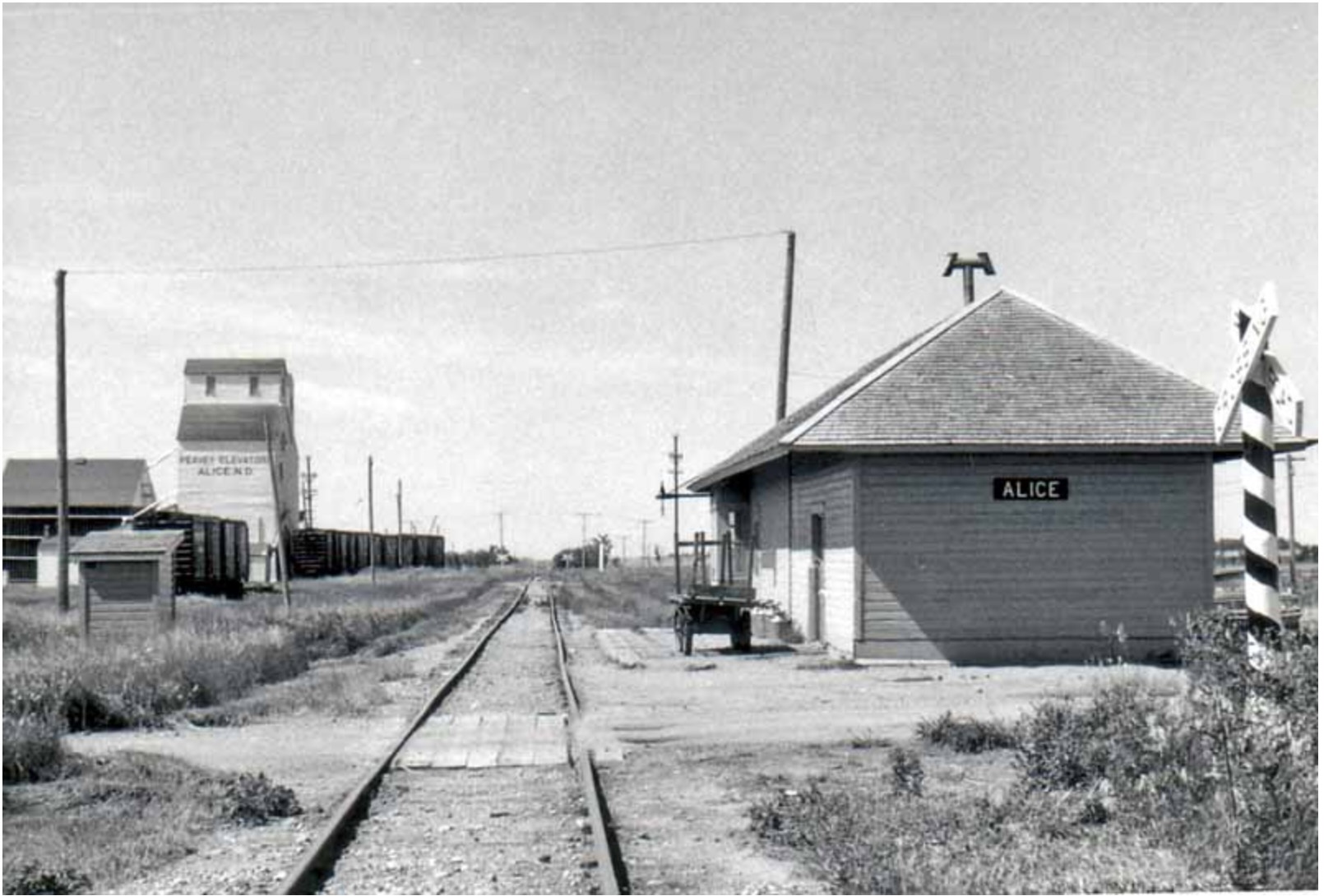
I was maybe five years old when they built the annex there, there to the south of the Peavey Elevator. And those railroad tracks—twin lines of steel pointing towards the infinity of the wide prairie horizon.
And if you look closely at the wall of the Northern Pacific Depot, you see the siding boards changed from a four-inch lap to a three-inch lap. I was told when I was a kid that there was an intention at one point in time in the 1950s to remove the portion of the building nearest the photographer—that they had put on new siding in anticipation of that change.
On second thought, I’m not so sure that that’s the case. Actually, what I think is the case is that the original depot was the three-inch siding, and that as the town grew and the need continued to rise, they added on to the depot, which is where the four-inch siding came in, and they increased the size of the freight house, etc., etc.
So it’s just a matter of perspective, I think. Doesn’t really change the outcome in the least.
The tracks are gone, the building is gone, the elevator is gone, and yes, the outhouse is gone.
Our store was a block and a half north of this spot. I have memories of pulling my Radio Flyer down to the depot in the morning when the train came in. We used to order our meat from Swift and Company. They’d put the order in disposable wooden slatted crates held together with heavy wire and packed in ice. The train crew would set down a fifty- to one-hundred-pound crate dripping meltwater and blood, and I would haul it back to the store in my wagon. Seemed like every dog for ten miles around followed me home, trailing that dripping, bleeding cargo.
You see where the road bisects the tracks, just beyond where the camera shows? That road slopes down a bit and takes a turn maybe twenty-five or thirty degrees to the right. As a result of that slope and the way the road turns, there was always a buildup of gravel—loose gravel—and sometimes when I wasn’t paying attention while riding my bike on some errand or another, I’d hit that loose gravel and spin out. To this day I have scars on both elbows from landing on them in the gravel.
None of this remains.
The elevator, the tracks, the depot, the road as I knew it—all gone or changed beyond recognition.
But the scars on my elbows are still there.
Funny, isn’t it?
What survives.
The Town · Poem
Listen · Read by the author · 0:53
I used to stand out there between the tracks
Stare on down the grade of the old NP
at that place where the rails come together
seem to touch
I didn’t know it’s name
but I knew somehow deep inside
I was looking at a place
beyond the here and now.
I could not but feel my smallness
in the presence of immensity
where a million pasts are recorded
and a million futures a possibility
The place where every thought ever thought came to be
and words before they’re ever even spoke
And I know too
that every feeling ever felt
is in that place
that I don’t know the name of
Where the rails come together
Seem to touch
The Town · Poem
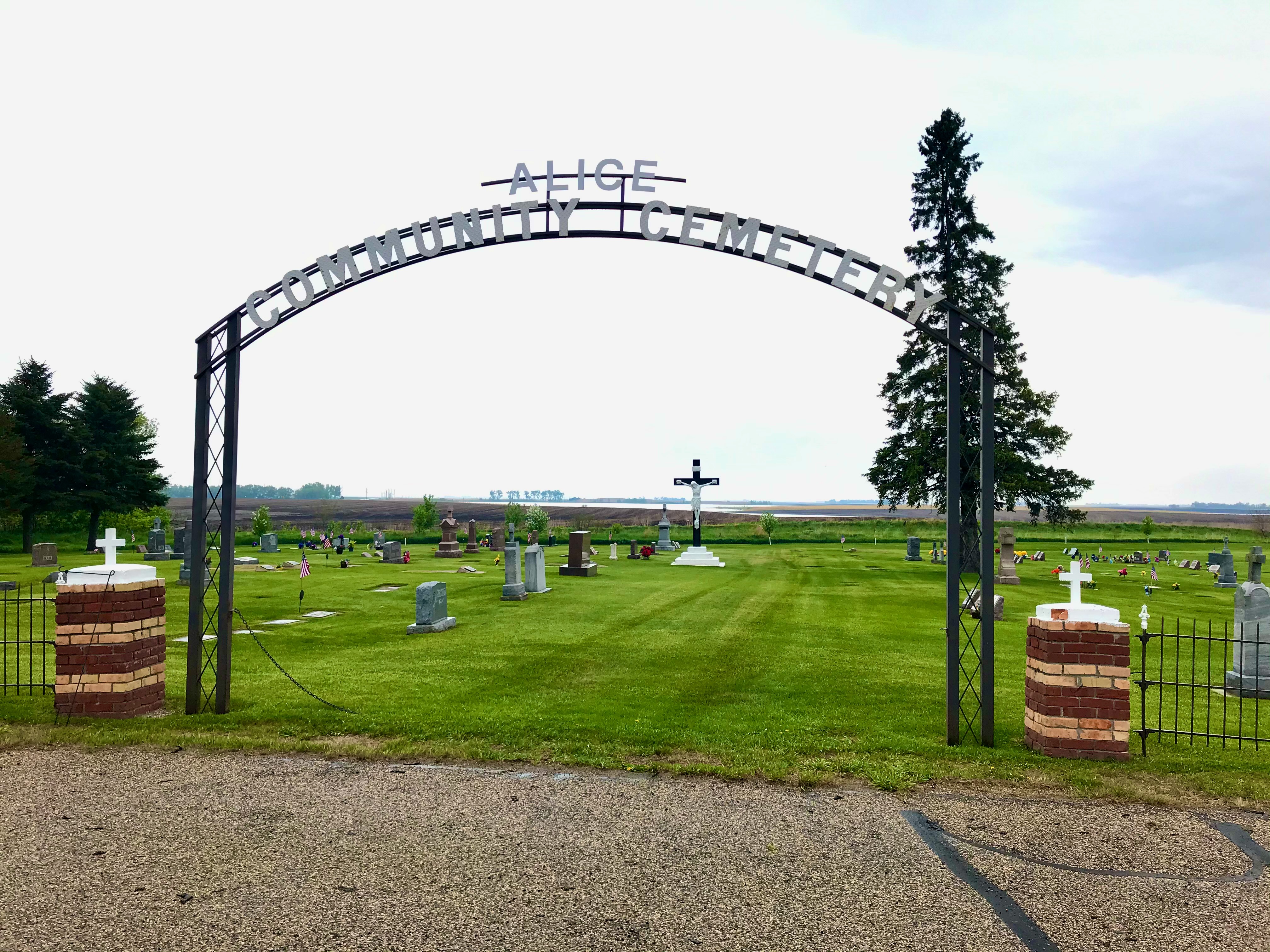
The shadow of the crucifix in Saint Henry’s Cemetery
falls across the railroad tracks
that seem to come together
vanishing
on the wide Dakota horizon.
And as the population of that cemetery swells
the population in my town diminishes.
I used to lie upon the ground
listen to the cottonwoods.
And when the wind was right,
I could smell the smoker
at the butcher shop.
Butch’s hams were famous in the world.
His secret cure died with him though.
Just weeds and broken glass anymore
where his smoke house used to stand.
Remember old Jack Frost
painting finery
on the windows of our store?
The ceiling of the Sistine Chapel
no more rare to me
than those windows—
where God reached out His finger
to a crystal tapestry.
Sometimes, lying on my back
staring at the blue
I ask myself:
How do I depict a silence
that seeps inside my very bones?
How do I measure infinity?
How do I hear the sound of light—
that’s a crimson fire burning up a prairie dawn?
My memories are more clear I think,
when my eyes are closed—
they seem to sharpen
as the world I knew slips beyond.
The shadow of Saint Henry’s crucifix
still falls across the NP grade,
but they removed the rails years ago.
Our store died with my daddy.
and there hasn’t been a restaurant in fifty years.
We’re used, I think,
to the intensity of silence out here—
out here on our Dakota steppe.
We’re like those railroad tracks,
on the old NP…
vanishing,
on the wide Dakota horizon.
The Land · Poem
Listen · Read by the author · 0:50
When ever first I saw
hay bales in the round
the snow that fell the night before
was like icing on the top
of six foot cinnamon buns.
It was in the meadow that I saw them
that meadow in the bottom land
along the knee deep Maple
where those teepee rings
and grass up to my waist used to be.
When last I walked that native ground
the cottonwood still lived
there up top the prairie roll.
It’s silhouette against the sky
a salient icon in those times.
It’s all cascading thoughts anymore
memories colliding with reality.
Like hay bales in the round
teepee rings
and grass up to my waist
in my used to be.
The Town · Poem
The sound of the door
opening and closing in the store
seeps through the walls into my room.
I’m supposed to be asleep
but it’s still light outside
so I’m kneeling on the floor
my elbows on the window sill
looking through the screens
at the growing dusk.
It’s high summer in North Dakotah.
When the sun comes up at four AM
and darkness doesn’t happen till after ten.
The floorboards in the store
creak and shift with customers
till midnight maybe later.
Make hay while the sun shines
is literally true on the Northern Prairie.
It’s darker now
and I can barely see those trees half a block away.
I was on my back this afternoon
in waist deep grass beneath those trees
my pistol loose in my hand.
It’s a pearl handled colt
like the one Roy Rogers has.
The acrid smell of burning cordite
lingered in the air
my horse and I were killed
in that charge up San Juan Hill
Rough Riders from North Dakotah
following Teddy Roosevelt in some forgotten war.
I lay dead in the grass beneath those trees
when my death on that Cuban battlefield
was transcended by a vision.
Framed in foliage twenty feet above my head
silhouetted against the purple sky
with the hum of dragonflies in the air
I spied perfection.
God must have been a nine year old
when he put it there I think.
The delicacy of line in the Pieta
no more lovely than the carved perfection
of this...the finest slingshot crotch I’d ever seen.
I marked the spot
measured with my eyes
the exact position of tree and branch
Roosevelt and Rough Riders totally forgotten
I ran to fetch a saw.
I shinnied out that narrow branch that day
clothes line rope tied onto my overalls
on the other end the saw.
I felt bad I had to cut a living branch
but I wanted more than anything that slingshot crotch.
After it was cut
my Daddy helped me turn the raw materials
into a work of art
or at least it seemed like art to me.
He showed me how to measure
how to cut the spokes so that they were even
and he told me about the rubber needed
nothing else would do but red
black is imitation doesn’t have the proper stretch.
Inner tubes from trucks are best
from underneath the tread where it’s thickest.
You want to cut the rubbers straight
so the rocks fly good and true he said
twenty inches long and a half inch wide or thereabouts
any longer and I won’t have the span of wing to draw it
shorter and I won’t
get the proper pull.
It takes two to build a slingshot says my Dad
one to loop and stretch the rubbers
the other to tie it tight with a string.
Dad showed me too
how to make the leather pouch for the stones
from the tongue of a worn out shoe.
When I look back
I find interesting the things that mark my life.
Nearly sixty years
and the muscles of my arms and chest remember
as if it were this afternoon
the feel and tension of the draw
when I pulled that slingshot tight.
I can hear the whirring flap the rubber makes
drawn and stretched in the prairie wind.
Nearly sixty years
I can feel that leather pouch between my fingers
tucked against my cheek
the slapping sound when I let it fly.
I’ve mostly come to see
the things that really mark my life
are pretty much plain and simple
like that slingshot that we built
just yesterday
in high summer nineteen fifty-six.
The Land · Poem

It used to hang up there
opposite the tulip window.
Up above the fabric fern
that sat for fifty years
on that stand of stained mahogany.
That picture of the harvest scene.
That picture of the threshing rigs and tractors run by steam.
Remember when the sun
shone through those cut glass tulips?
Lit that old brown tone
with a greenish yellow light?
It made that picture come alive for me
like I could climb inside that photograph
hear the harness bells
the clinking of the chains
as great huge horses drew their wagons near.
And the light would shimmer in the waves of heat
rolling off those twelve foot steamers
like rollers off a windy sea.
I could smell the sweat and grease and grime
of goggled men with three-tined forks
stoking boilers up to temp with straw.
The steam from those machines
a mist as from a super heated geyser.
And the twelve inch canvas belts
that stretched two hundred feet
slapped and flapped and sang
like the drawn tight stays of a clipper ship
racing under sail.
And the threshing rig
the gleaner with it’s bourdon whine
that set my very bones aquiver.
The breathless wheezing hiss
of the steamers.
The nickers and the neighs
and shouts and whistles
of the horses and the crew.
A kind of order
borne of chaos and confusion
dissonance controlled
in a symphony of sorts.
I am grateful
that a hundred years and counting
since that photograph was done
when I look into it’s depths
I am grateful
that the symphony still sounds for me.
From the long road home
This is an archive of place, not a monument to a vanished town, but a living notebook of the people, weather, work, and some of the small exact things that make it real.
The Weather · Poem
Listen · Read by the author · 3:07
Cold that has you breathing through your nose
cause if you don’t you know your teeth might break.
Silent still windless cold.
Cold so quiet
you can hear the beating of your heart.
Cold so quiet
the silence seems to come in waves
that pound inside your ears.
Cold so quiet
the sound of branches
splitting on the trees
on the slide to minus forty
makes you jump
almost out of your skin.
The kind of cold
that even if you think
you’re not thinking about it
you’re thinking about it.
Cold that IS.
From the Day of All Saints,
to that of Saint Patrick,
cold that simply
IS
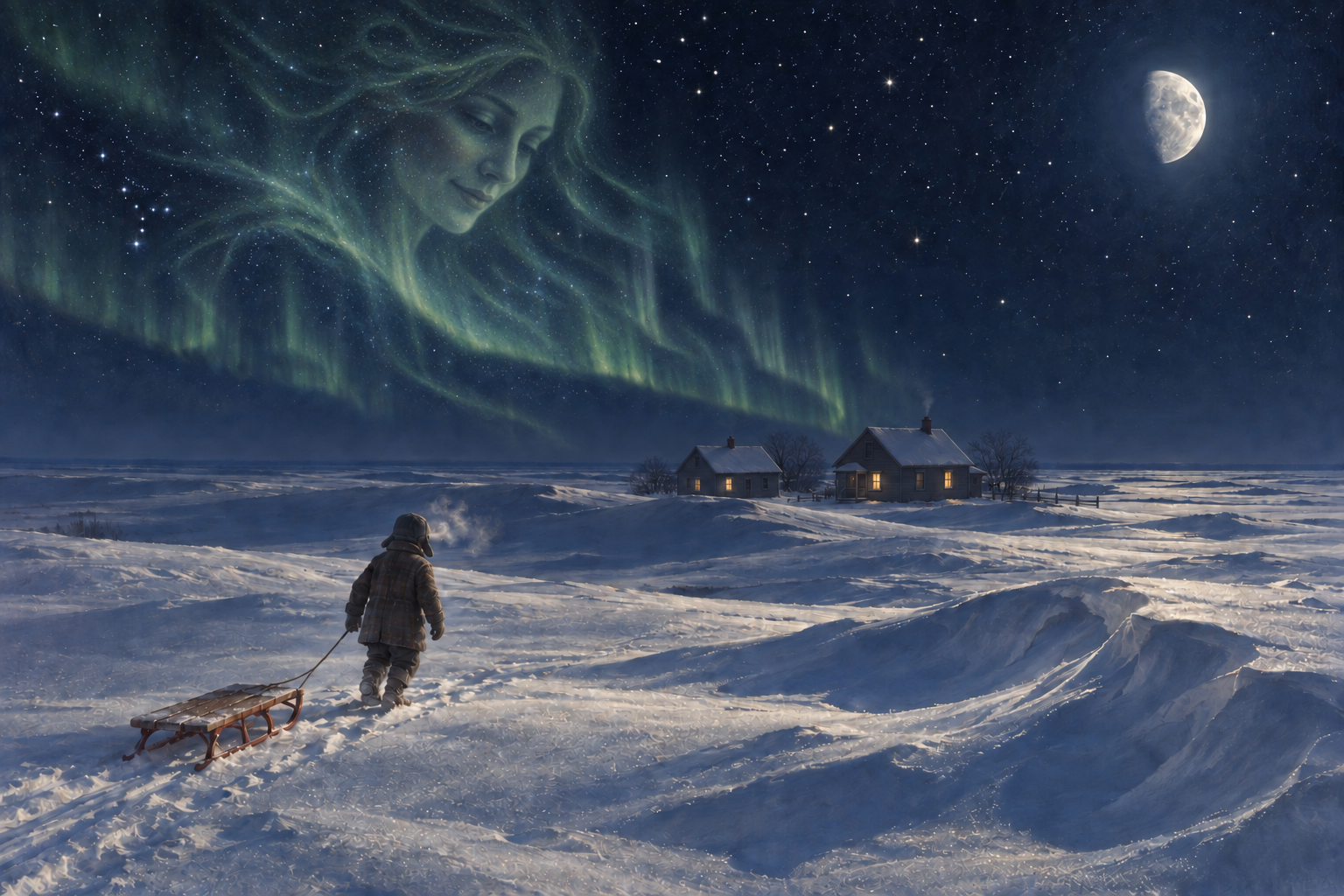
It’s five o-clock in the afternoon.
Full night in the solstice North.
His frosted breath floats skyward
as soon as it leaves his nose.
His world is of the cold.
Drifts like combers on a winter ocean
blue in the light of a three quarter moon.
Crystal shards of ice
suspended in the air
light his path
like frozen faery dust
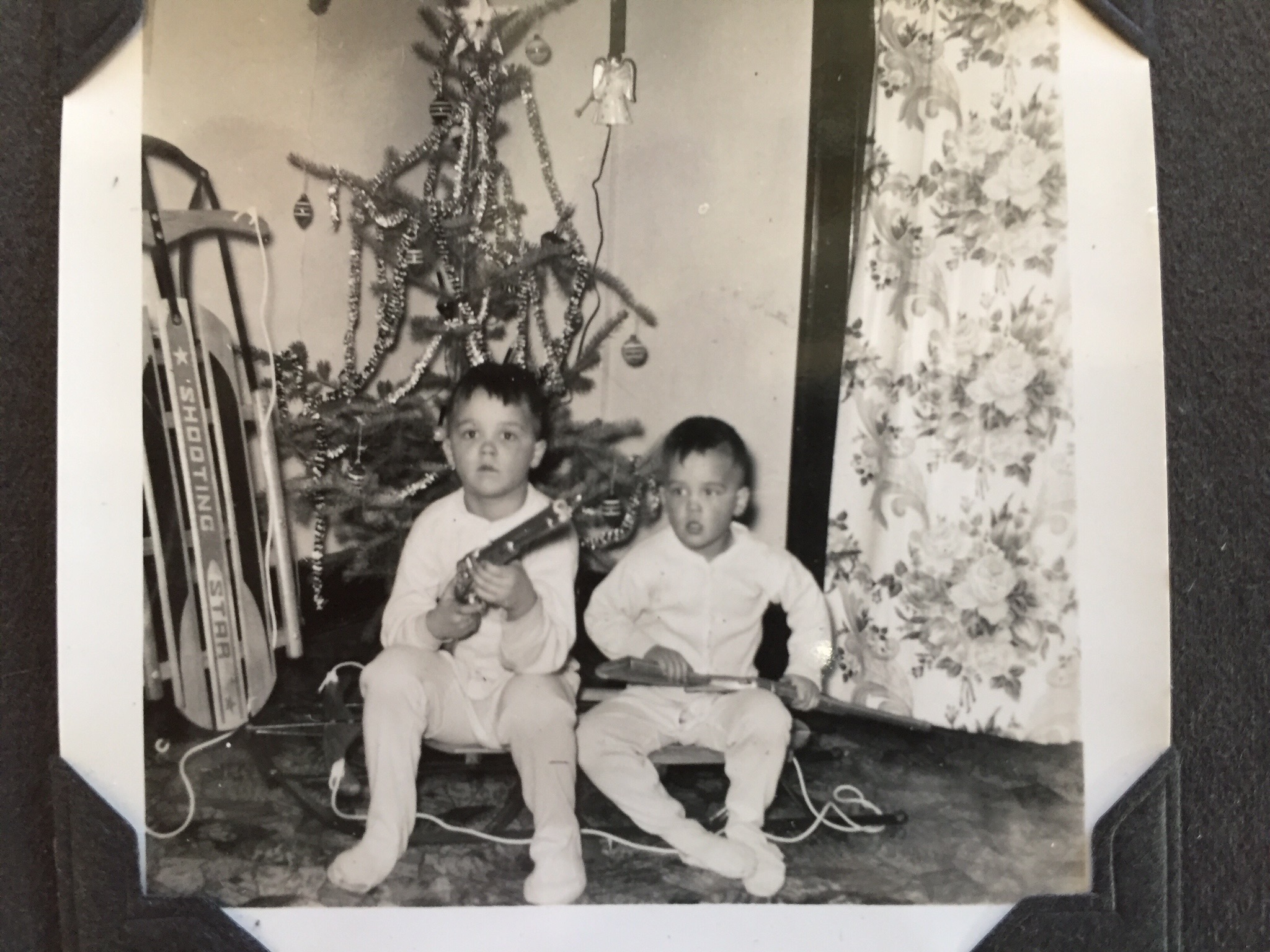
He hitches up his sled a fraction higher so it doesn’t slip.
it’s his Christmas sled,
the sled he keeps there
right beside his bed.
So he can touch the wood
that glows like polished amber.
So he can slide his fingers along the runners
of Christmas Flower red.
So he can reach and touch while he sleeps.
He loves the sound the runners make,
shussing on the snow
defining the silence of the night.
The numbing cold that grabs his face
chills it to the bone
and the way his tears
freeze in droplets to his lashes
in the downhill breeze.
He loves the stars
so bright against the coal black winter sky.
He loves the solitude
the waking of the Northern Lights
like window sheers in God’s own parlor
furling and unfurling in an unseen wind.
These are the times he feels his smallness
his insignificance.
These are the times
when he can almost taste the answers
to the questions at the edge of his understanding.
Lady Winter watches the boy.
Smiles to herself as he struggles to comprehend.
Knowing his words are yet too small
to attempt to define the undefinable.
Except that it’s cold
really cold.
The Town · The Store
Mac McMahon
Listen · Read by Mac · 3:23
I chuckle sometimes at old photographs —
sepia-toned, with faces I can’t name
posed against walls I don’t remember.
And I recall, as a boy,
admonishing the ancients —
Be they Greeks or Romans or Celts —
for building not their worlds
with more permanence.
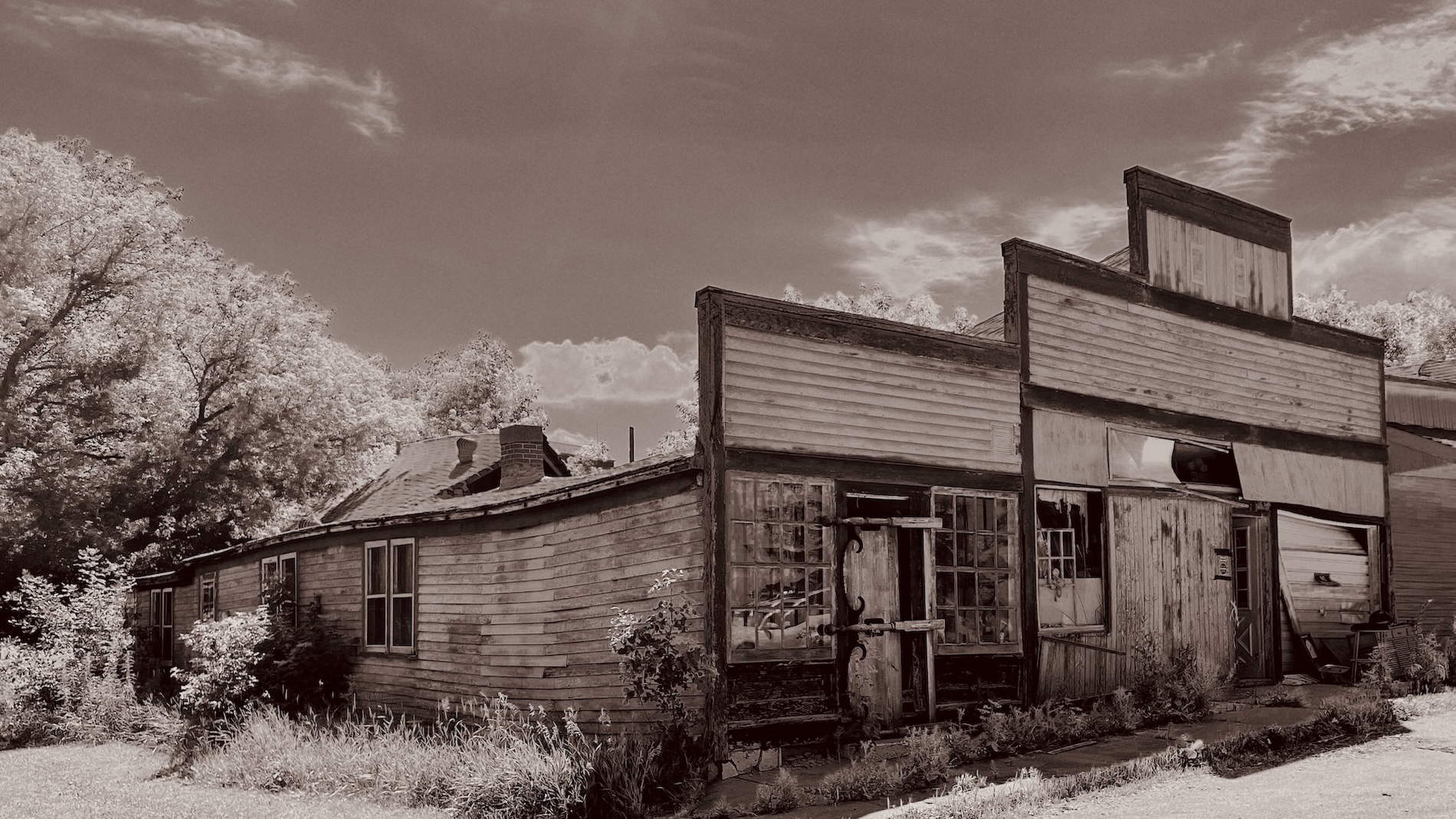
So here I am, this day,
my own personal ruin crumbling before my eyes.
Here I am, this day,
walking through this place I once — and still — call home.
With its sagging roof,
its hardwood floors that creak and groan,
warped and sloped,
and still —
in spite of all the ruin and decay —
still:
everything so achingly familiar.
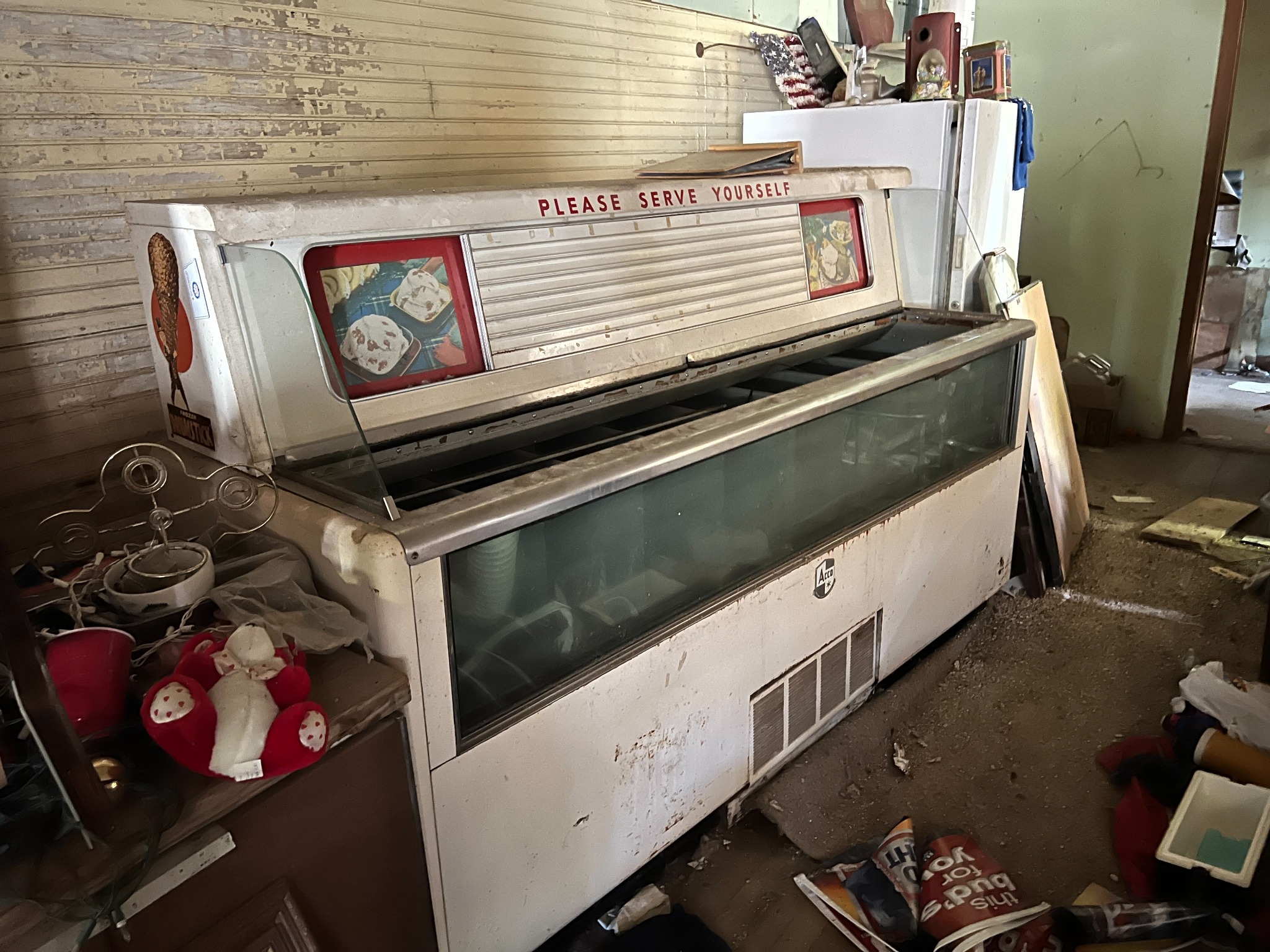
There!
See it there, against the wall?
The freezer that my Daddy bought in 1957,
the very one
that held those Bird’s Eye frozen vegetables and Swanson TV dinners,
the very one
where popsicles and pushups
and ice cream bars and drumsticks were imprisoned
before their liberation
by some youngster of a summer afternoon.
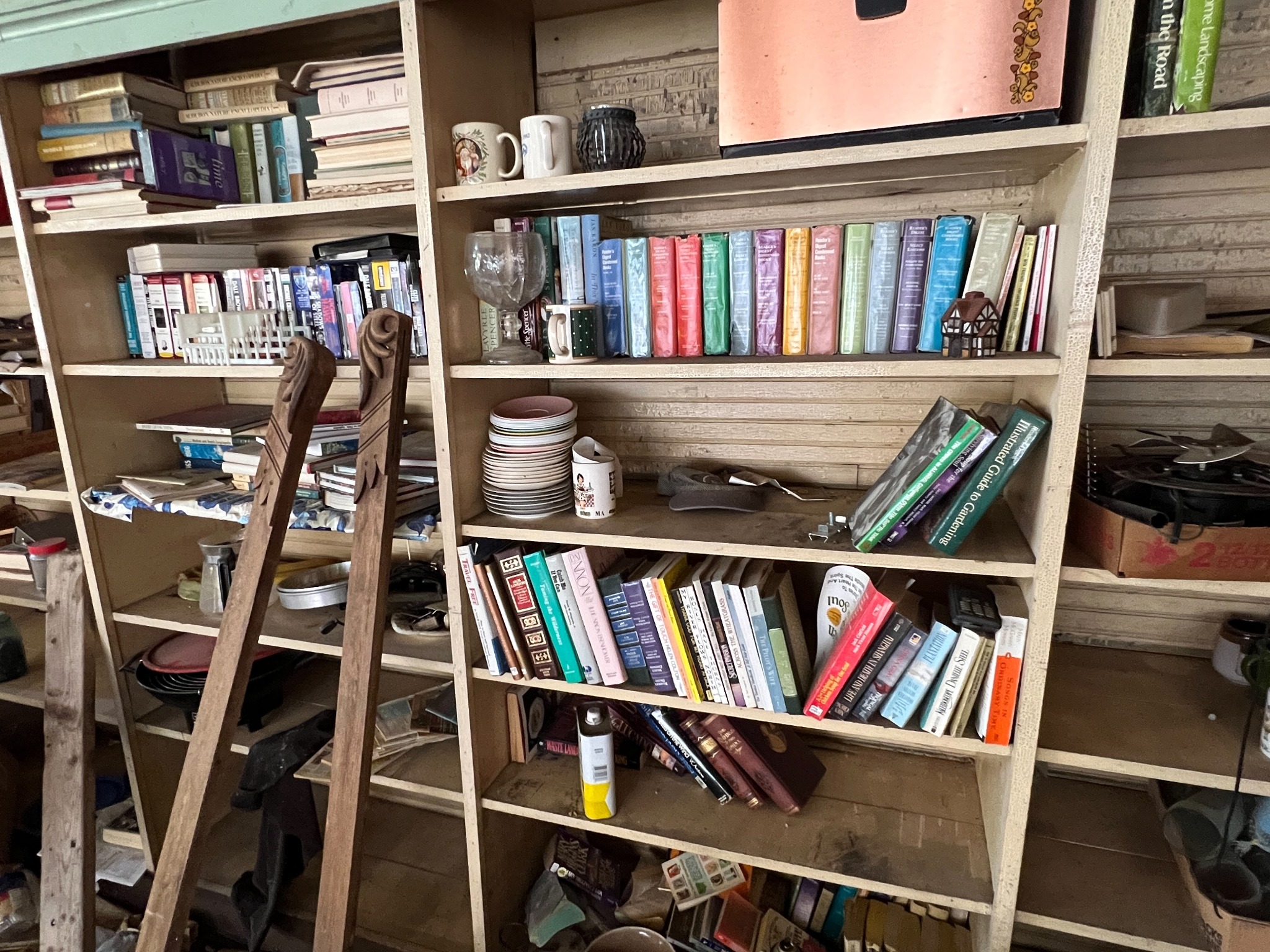
And oh, the books —
Lord, the books —
stacked and waiting still,
pages swoll with time and mold and wet,
their spines bowed out
like tired old soldiers
standing in a skirmish line.
And in the back —
the back of the house where we lived,
the back of the house that was home —
in the kitchen there
even yet today
behind the flotsam and the jetsam
those ancient yellowed
Better Homes & Gardens
designer kitchen tiles,
tiles our Momma chose
with such love and pride.
I still can see the spot,
feel the sadness that she felt
when one of those
kitchen tiles was cut
by a falling cast iron pan.
And unless you knew,
you’d never see that dent —
the one my finger left in the plastic wood
in a knothole in the closet wall —
a six-year-old leaving his mark,
as if to say:
"I was here."
And I was.
And in a way, I still am.
What I see this day —
what I choose to see —
isn’t the ruin,
isn’t the decay,
but rather, I think,
it’s the testimony of legacy.
Do you suppose that I’m seeing
not with the eyes of a man,
but with Goethe’s “second sight”—
the kind that’s gifted
to poets and fools —
and to sons who are both —
who still ache
for the smell of Red Oil Polish
and the sound of the bell above the entrance door.
Yes —
I needs must remember.
I needs must write
before the echoes fade,
before time folds it all back
into the dust.
The Weather · Winter
Listen · Read by the author · 1:21
When the temperature is low enough
to let zero seem a heat wave
it’s with a fondness
I recall winter afternoons at the farm.
It’s when the little sounds in the quiet there
seem louder
and the smells and scents
to which little heed is mostly paid
are sharper and more salient.
When the swinging of the pendulum
in the clock above the sideboard
is contrapuntal
with the tick, tick, tick of the cooling stove
and the coffee smells
from that white enamel pot
tickle at my nose.
It’s the way the pages of Dakotah Farmer
rustle when my Grandpa turns them
or the velvety tobacco smoke
from the pipe that he is puffing on.
If I close my eyes today
cock my head just so
I can hear his fingernails
drumming on the table top
smell the fried bologna and the sauerkraut
Grandma made for dinner.
When the temperature is low enough
to let zero seem a heat wave
on those winter afternoons
at the farm.
The Weather · Winter
Listen · Read by the author · 0:57
Fifty rods or so
west and north of the house
a line of sixteen cottonwoods
stands perimeter.
They shed their leafy glow in winter time
those cottonwoods.
Their naked limbs
like bony fingers
clawing at the wind.
When shadows are the longest
and the sun has gone on holiday.
When the cold has become
a being sentient
and the banks of snow
that embrace the sleeping trees
are taller than my head.
It is then the winds of winter
sound through those cottonwoods
like a distant train at speed.
And there
beyond that sound that ears can hear
there’s a feeling reaches past
that winter wind
to the underpinnings of my soul.
The Weather · Winter
Listen · Read by the author · 0:38
Like a winged specter
the Arctic owl alights
upon the grey blue snow of night.
She has no care
for the beauty of the moonlit dark
the shadows of the trees
that stretch themselves
in frozen charcoal renderings.
She alights without a sound
a ghostly apparition
that when she takes to wing once more
leaves not a trace
on the grey blue snow of night.
The Weather · Winter
Listen · Read by the author · 0:27
Winter trails fade,
thaw
in the warmth of a springtime sun.
Sleep
through stick horse summers
BB guns and bicycles
cops and cowboys and baseball bats.
In October they rouse.
Stretch.
Begin searching about ...
for snow.
The Weather · Winter
Listen · Read by the author · 0:24
In the silence of the night
the shadows of the cottonwoods
stretch like silhouettes of frozen smoke
across a newly fallen snow.
There’s an honesty in the stark and spare
that opens up the soul
lets it breathe
in the winter white.
The Weather · Winter
Listen · Read by the author · 0:54
It’s when the blizzard rages
and the windows rattle in their frames
that I think about my winter dreams.
It’s when I pull the comforter
up around my ears.
It’s sitting by a fireplace
with strains of Vivaldi
imaging the wind.
It’s when I breathe an opening
in the rime upon the window glass
to see how high the drifts have become.
It’s when I gaze
across a prairie etherized
beneath a moon as slender as a host.
When the storm has fled
and the silence has become
a thing of form and substance
that I think of things
like the memories
of my winter dreams.
The Town · Remembrance
Listen · Read by the author · 7:44
I had an uncle on my Momma’s side actually he was my Gramma’s Uncle Joe. Uncle Joe came to Alice before the town was even there. Around eighteen ninety eight or so.
He’d heard the Northern Pacific was building a line through here. In the days of steam the railroad guys would plot the right away. They wanted the towns spaced just right so the trains could take on coal and water. The story goes that Joe found out the right-of-way was gonna go through just a little ways north of what one day we would know as Alice Slough. The best place in the world for hunting geese and ducks.
Uncle Joe had always kinda wanted to own a general mercantile and he’ d been thinking about a place to build it. So he took a chance and built it there by the wagon road just a little ways north of Alice Slough. And even though the railroad guys had wanted it built six miles west, my hometown, Alice, N.D. sprang up there around that store.
Gramma’s Uncle Joe ran the ‘Alice Mercantile’ till the end of World War One. Grandpa’s brothers Ernie and Frank changed it then in nineteen twenty to ‘Kapaun Brother’s Groceries and General Mercantile’ which it remained till the end of World War Two.
In nineteen hundred and forty seven my Mom and Dad bought the place for seven thousand dollars and changed the name once more to the Alice Fairway Store. It was my families business, the store that I grew up in, for over twenty years, till my Daddy died in sixty nine. And though she closed it late that year my Momma lived in her apartment there for more than fifty years.
There’s an old coal furnace about the size of a Bessemer Converter in the basement of our store with a stoker door so doggone big it could have been a boiler door on Titanic. Three, four times a day my Daddy stoked that furnace in wintertime. Every shovel scooped and thrown by hand. Peavey coal briquettes were what we used. I always thought that we were really swell using fancy coal briquettes not the ugly lignite that other people did. There’s a colored sign on the coal-yard wall down by the N.P. tracks. A lady with a coal briquette in her white gloved hand, ‘Heat your home the modern way’ she smiles ‘Heat with P.V. Coal Briquettes’ I was proud that we were modern too .
They filled the bin with coal through a rusted metal door whose hinges squeaked and squealed and when the door clanged down it was like the slamming of a hatch on a submarine.
The latch was broke and the door held shut with a piece of baling wire. Sometimes though the wire came off, and if the wind was right the door would flop and clang something fierce through the winter night.
My Uncle Eddie had a three ton Dodge that he hired out for hauling jobs to make some extra money. Every month or so in winter time he’d bring us coal in that truck. Shovel it down the chute into the bin. He delivered coal to lots of people my Uncle Eddie, but we’re the only ones I know for sure got Peavey Coal Briquettes.
There’s a steel grate in the centre of the floor, maybe ten foot square where the heat would rise up from the furnace. That furnace didn’t have no fans or blowers the air just moving naturally with the temperature. I’d often sit at night in wintertime look at comic books tucked up against the furnace grate my butt end almost blistered my toes so cold that i could barely feel ‘em. The air above the furnace grate would shimmer in the heat and ten or twelve feet away you could almost see your breath. The only sound the prairie wind careening through the winter night and the quiet “tick”,”tick”,”tick” of the cooling furnace grate
There were three big lights in our store hanging down on cords six foot long, one up front, another near the back, and one hung over the furnace grate, the globes were glass of creamy yellow white, and you switched them on and off by pulling on a string with pasteboard cutout signs hanging from the ends, ‘Holsum Bread’,’Fairmont Milk’,and ‘Camel Cigarettes’ slowly twisting in the yellow light. On winter nights when the store was closed the light above the furnace grate was the single one, kept the dark at bay. The world without was deep in shadow and I was in the centre in that yellow light my butt against the furnace grate.
There was something almost intimate to those moments, brought a clarity to things, I sometimes feel the world has lost it’s way, that we’re kinda like those pasteboard signs anymore, slowly twisting in the air above the furnace grate.
The floor in our store is inch thick maple colored nearly black with sixty years of oil from the sweeping mix. The store has settled over time, so when you walk the floor it creaks and groans like an older man grousing of his rheumatism.
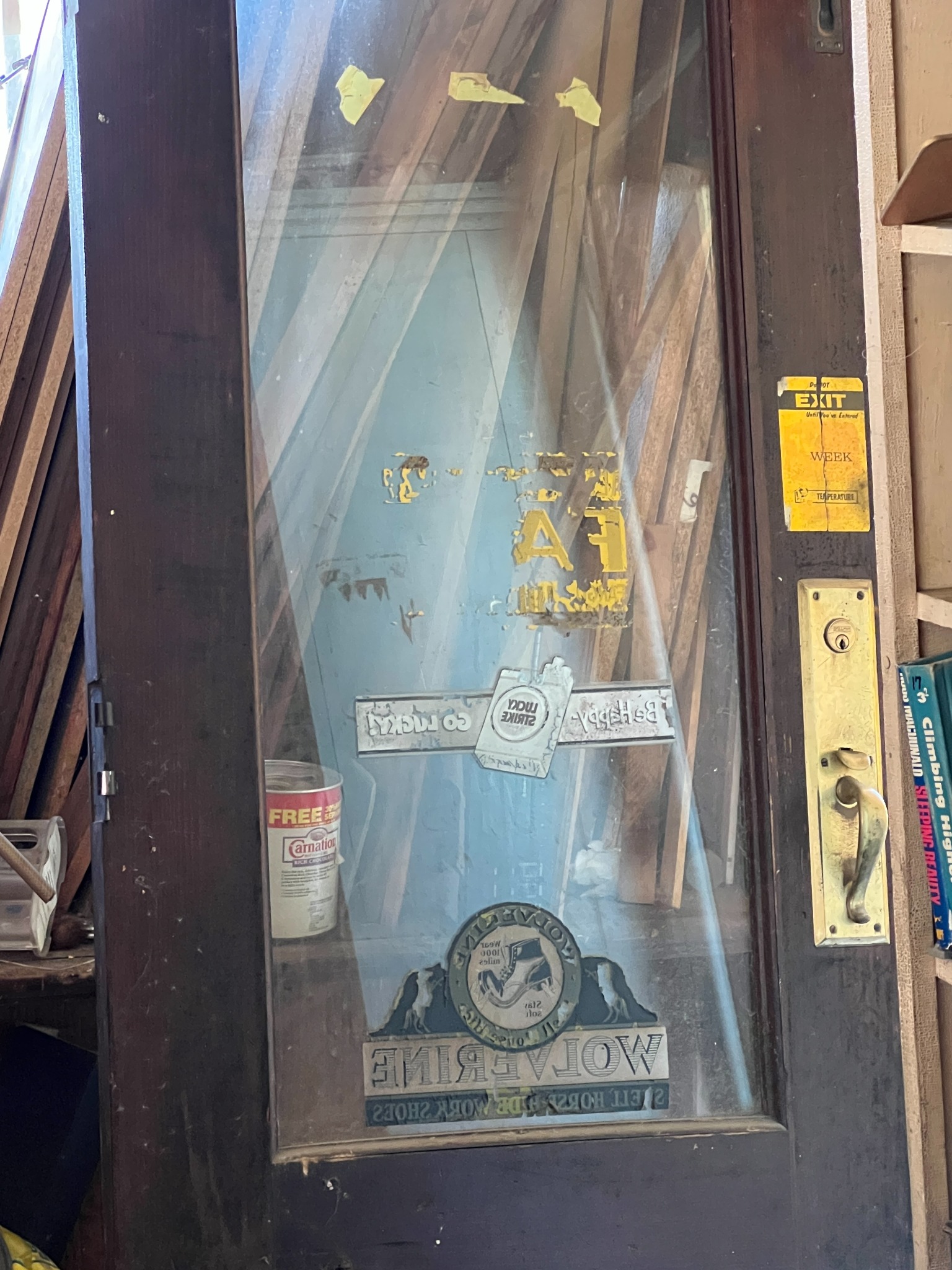
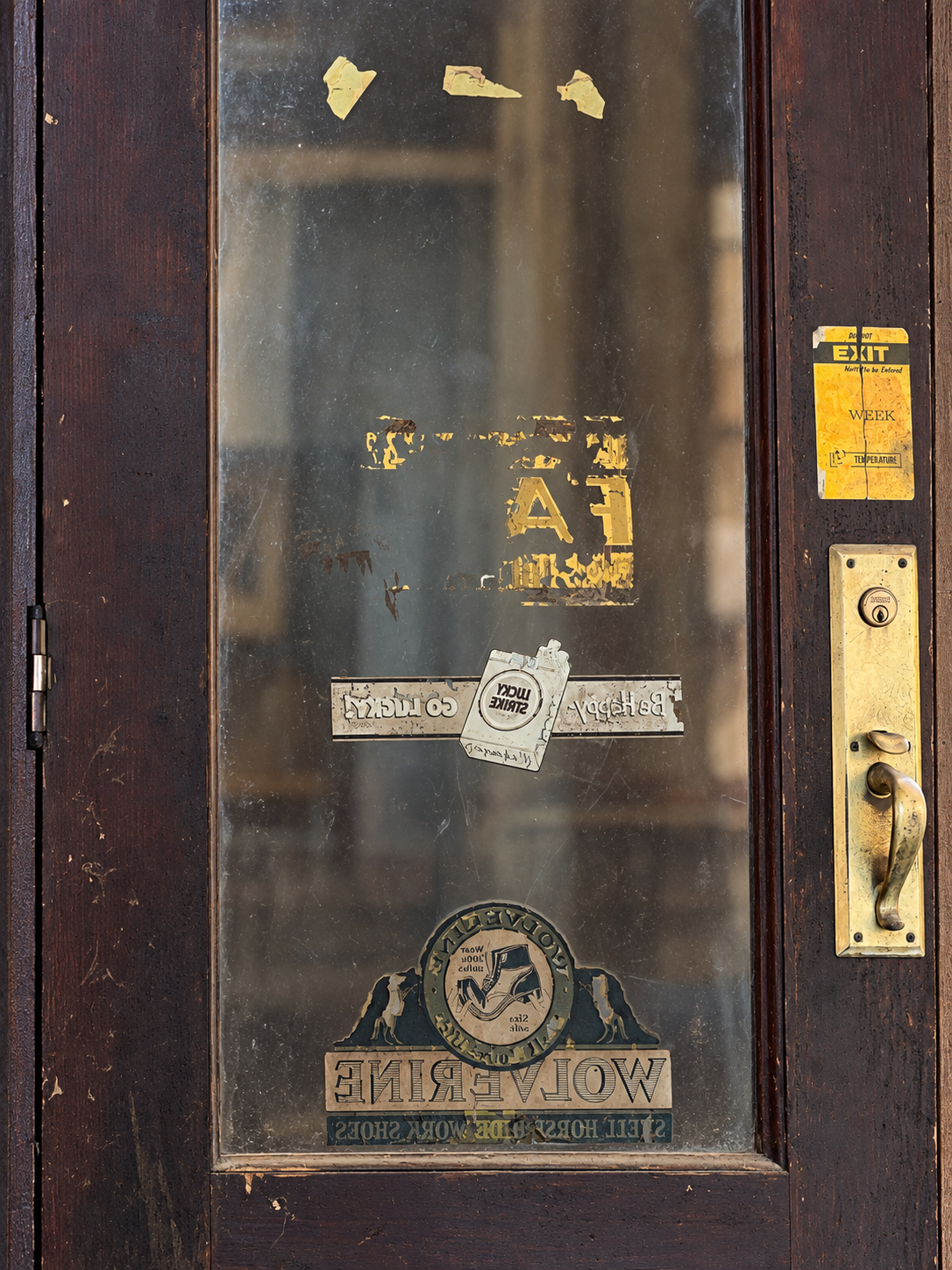
The entrance door is oak, varnished almost black and in the center there’s an oval window of beveled plate with a work boot decaled at the bottom. There’s a closer on the door, so it doesn’t slam when someone lets it go and at the top a bell that rings when a person leaves or enters. When I close my eyes I can hear that door, it’s sound a signature through the years. The clicking of the latch and swishing of the door, the ringing of the bell and liquid ssssklunk as the door swings shut once more. Often we could tell who came in, just from the sound of the door, and the creaking of the floor when they walked.
When I close my eyes, a hundred scenes play in my mind, and a lot of them aren’t sights at all, it’s scents and sounds that trigger memories that truly tantalize, I used to wonder why I felt so good with the smell of Red Oil Polish in the air. Then I recalled the oaken cabinets in our store, waxed and shining, glowing in the sun streaming through the windows of an afternoon. Or I find myself half smiling, at an open jar of German dills, vinegar curling ‘round my nose like the ones we sold from barrels long ago. And when the smell of coffee is percolating through my brain, inside my heart I see the mill that sat at counters end, ground those beans of Radiant Roast, filled the air with it’s bouquet.
I remember too my Daddy, the apron that I’m pretty sure he wore to bed. Those crinkles at the corners of his eyes. With his thinning hair parted down the centre he looked still like his graduation picture nineteen thirty seven. It’ s the little things, the things not seen at first, that bring my Daddy into view. His rapid step, that I had to run to match. The tinkling of the spoon in his coffee cup. And I see him clear, like he was standing with me now, not just a fragment of a past remembered, when I catch the scent of burning cigarette.
Closed forty years our store still stands today. Though the paint is peeling the plate glass windows still are there. Ever since that I was small I’ve had the feeling there was magic in our store. And I think it’s mostly true, cause when I look through that window glass, I can see my Daddy walking toward the door. And if I shield my eyes, I see Frank and Ernie, and Uncle Joe in there too.
The Land · Poem
Listen · Read by the author · 6:10
There used to be a place
in County Cass of North Dakotah.
South of Alice
north of Sheldon and the Ransom County line.
You traveled down a one lane gravel road
with fields and prairies on either side
and of a sudden you realize
those bushes there ahead
aren’t really bushes at all.
They’re the tops of trees
in the valley of the Maple River.
The road gets narrow at valley bottom
a tiny single lane
and if you cross the river on that one lane wooden bridge
you can feel the sway and squeal of every spar and timber
and the surface planks that go ker-flump
every time a car goes over.
It feels like how I think a ride at Disneyland must feel
a heckuva thrill when I was ten.
Still and all I was glad for solid ground just the same.
A hundred feet this side of the bridge
a two track prairie road
branches off
disappears into the trees.
Sorta hard to see
from the King weeds and the Fire-bush
trying to block the view.
Ernie says having the driveway hard to find
might keep people away that you’d just as soon not see.
Fifty yards further on
that road goes into the trees
into the shadows there
a tad bit gloomy for a kid of ten
fresh come from the prairie.
I was used to the sun without much shade
and this felt kinda like entering a church that wasn’t mine.
I figured God was in there too
but he might be wondering just a little about me.
In spite of it’s seeming indifference to humans
I always felt included in the Mother Prairie’s creation
I’d always thought I had a special place in the universe of the plains.
‘Cause God could see me there in the light of the sun
I wasn’t so sure about the shade.
We went through those trees skirting the knee deep Maple
to another then
The light ahead like the end of a tunnel through the Hindu Kush.
We burst from the gloom into a different world
a northern plains Shangri-La.
Over sixty years and I marvel still at the texture of that light
where the air itself seemed to glow
with a million colors we couldn’t even name.
It simply was the Garden.
My Uncle Ernie’s Maple Valley Garden.
Acres and acres of berries and trees laden with apples
and vegetables and flowers of a hundred different kinds.
Butterflies and Dragonflies like so many faerys
flickering on golden shafts of light.
And quiet.
Quiet so quiet I can hear the hum of a million bees
or the purring of the cat rubbing up against my cousin’s leg.
There’s a cabin at the garden where cousin Ann and I would play.
Prairie Soddy one day, the Palace of Versailles the next.
And that knee deep Maple River
that might have been
Cleopatra’s Nile
Huck Finn’s Mississippi
or just a place to cool on a summer afternoon.
My cousin Ann was born in February me the following December
Ann would say ‘for two months we’re the same
but after February she’s the oldest.’
I sorta knew she just liked being boss.
One day Ann wanted to be Stanley
hunting Livingston up the reaches of the Nile.
I figured she just wanted to say‘Doctor Livingston I presume’
while I stood around looking dumb.
So I talked her into Lewis and Clark up the Missouri.
She was alright with that as long as she was Lewis.
( I figured she wanted top billing)
She might want to be Sacajawea I said being a girl and all.
Cousin Ann didn’t speak she just looked at me like a fox would watch a rabbit.
I forgot about Sacajawea.
Thus was born the Expedition of Nineteen Fifty-Seven
Captain Lewis declaring
‘these intrepid adventurers would explore the farthest reaches of wilderness
and reach the Pacific Ocean.’
While Captain Clarke allowed
‘thats all well and good
but we have to be back by suppertime.’
About a mile up the knee deep Maple is where we found them.
In an open meadow where the grass was arm pit high.
It’s where we found those circles hidden there.
The teepee rings from a century past.
I know that it’s a little strange
but I could feel the people in those stones
hear their voices.
They spoke to me in a language just beyond the limit of my understanding.
It’s been my secret all these many years
that when I touched the stones I began to cry.
A sadness and a sense of loss I didn’t understand.
Sometimes today I think about those stones and gone people
and I’m saddened by how little the world has changed.
We still don’t glory in our diversity
we decry our differences instead
and in our arrogance try to turn others into us.
There was no radio at the garden
neither was there television.
The refrigerator’s a galvanized pail on the end of a rope
buried in a hole
ten foot underground.
We had a deck of cards and a checker board
a gasoline burning mantle lamp and we were never bored.
There’s great freedom in being a kid.
I didn’t have to feel embarrassed at finding beauty in my world.
It wasn’t about fantasy and Lewis and Clarke
it was about imagination.
It was about living and not apologizing for being.
About being at my Uncles Maple Valley Gardens at the age of ten.
And pretty much knowing
that all I really needed to know about the world was right there ...mostly.
The Land · Poem
Listen · Read by the author · 0:44
Almost iridescent
the sun bouncing off the marks
the incendiary initials
grandpa burned into the feed bin door
a hundred years ago.
Dusty hay and old manure
titillate the senses
as the sparrows in the loft
announce their boisterous presence
to anyone who’ll listen.
Through the open door
one can hear the cottonwoods
whisper in the prairie breeze.
And there's a scent of lonely here.
And a flavor too
of satisfaction
and the sweetly bitter after-taste
of hindsight
And the stalk of pigeon grass
I'm chewing on.
The Weather · Poem
Listen · Read by the author · 0:50
The touch of air
on my skin
still cool.
But the sun is warmer now
wam enough for steam to rise
from the dampened fallow
where there was white
a day or two ago.
Warm enough
that there are shoots of green
at the edges of the drifts
skulking off to hibernate
till Lady Winter rouses them
once again in the fall.
The touch of air
on my skin
still cool.
But the sun
puts the lie
to Boreal’s icy grip
with it's promise
of a North Dakota Spring.
The Land · Poem
Listen · Read by the author · 4:04
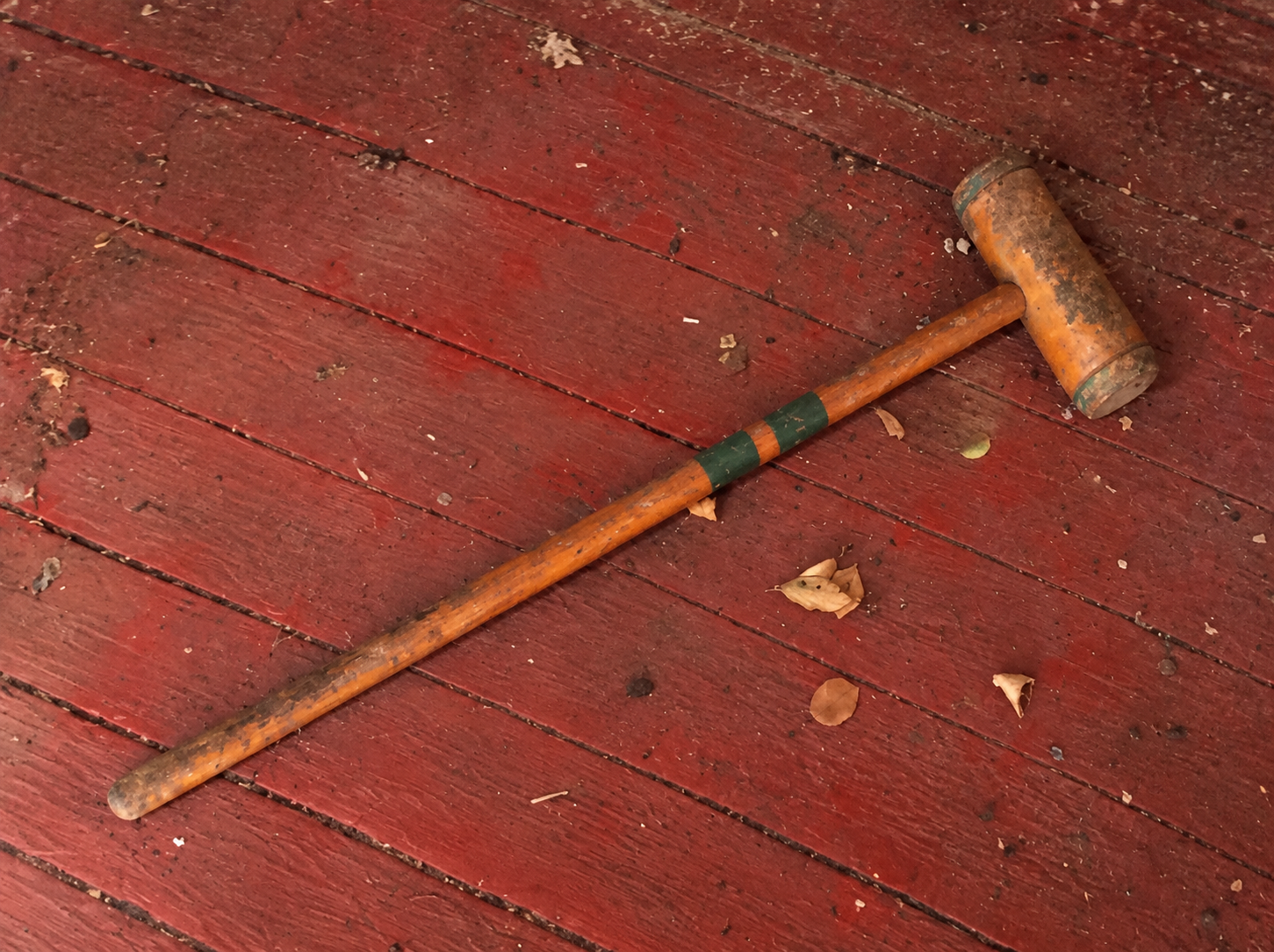
I can hear the clack of the wooden balls and mallets
from the croquet game going on
beyond the open window.
Across the way
the hum-chitta-thunk of the stanchion pump
keeping the water tank cold
for to chill the pop and beer.
It’s fourth of July at the farm.
I swing my legs under the chair
nursing my glass of Kool-aid
wondering how
I could’a been so dumb
Grandpa was poison in croquet
and I was the first one that he hit.
Doesn’t really matter though
as soon as Momma makes the salad
we’re gonna play kitten ball in the yard.
A Seven-up sign is home plate
squashed flat coffee cans the bases
over the granary or into the trees
an automatic out .
It’s really hot in the kitchen
maybe a hundred degrees.
Gramma just pulled the rhubarb pies from the oven
and the tart tangy smell filling the air
sets my mouth to watering
so much I have to swallow
just to keep from drowning.
Gramma’s facing away from me
working at the range
I knew that she was watching though
with that set of eyes I couldn’t see.
I heard a voice that sounded like hers
but I’m pretty sure it belonged to God
“If you think you’re getting a slice of pie
you’re sadly mistaken young man
so get outside and play kitten-ball with the others “.
Gramma had a way of saying stuff like that
so to make you feel totally guilty
just for wishing...
Gee I love rhubarb pie.
I love our Fourth of July picnics at the farm
Aunt Mildred usually so dignified
laughing like a girl.
Aunt Lorraine like a cruise director
on an ocean going liner
so concerned that everyone has fun.
My Daddy
cigarette stuck between his teeth
he would have had a coffee cup
but he needs both hands to bat.
Uncle Mac doesn’t play kitten-ball
cause he gave a lung to T.B.
but we couldn’t play the game
without his teasing and his jokes.
Everyone gets to play
from the youngest to the oldest
Even Grandpa gets to swing the bat
but he has a pinch runner
he says he’s too old for that.
After the game it’s supper time.
There’s about a hundred kinds of food
at picnics at the farm
fresh hot buns, home cured ham
Gramma’s potato salad with lots of onions and mustard
and wild horseradish to give it that extra punch.
We have burgers and dogs
batter dipped chicken fried in lard
and there’s a million kinds of pickles
all of em’ home canned.
Sweet and sour and everything in between
my favorites are Bohemian Dills
and my Gramma’s pickled beets.
It’s fireworks and bottle rockets after supper for the kids
and at dusk my Daddy does the Roman candles.
It’s almost like it was choreographed somehow
he sticks the rocket in the ground
then lights it with his cigarette
and runs to get away
we all go OOOOO and AHHHHH and clap
when it lights the prairie sky.
Kids would more than likely say today
“eewww how boring” or some such thing.
I guess I never realized
how unsophisticated we were
we were like some nineteen forties movie
or a Norman Rockwell painting.
And to tell the honest truth
I miss it
I miss the honesty the innocence
the wide eyed naiveté’.
We’ve lost our sense of joy I think
our sense of wonder at it all.
To tell the honest truth
I miss it.
Mad Musings
Listen · Read by the author · 4:16
I’ve been having a think.
That’s pretty much how these things start. I’ll be looking at something that seems perfectly normal, and after a while I start to wonder what might happen if we moved this over here, or opened a door back there, or put a window where there hadn’t been one before. Sometimes the result is better than anything I could've hoped for, and sometimes, well, sometimes I should have just gone and had another cup of coffee.
This time, I think I needed another door.
I like what I’ve been putting together here. The land, the town, the weather, the writing. Those are good places to keep the things I remember. There’s room for the people who mattered, the work they did, the sounds and smells of a store that’s gone anymore. For a prairie winter, the taste of rhubarb pie or the stem of the pigeon grass I was chewing on.
But I began to suspect I’d built myself a place where—perish the thought— I might feel constrained to behave.
No question about that, that could become a problem.
Believe it or not, the fellow who writes those poems also has opinions. Some have had years to ferment. While others probably should ought’a be left in the basement a bit longer before anybody opens the jar. He has questions, too, and once in a very great while, changes his mind 😊, which I understand is regarded in some circles as a character defect.🤨
At my age, I’m willing to take the risk.
So this corner is called Mad Musings. “Be kind. He’s old.” is there by way of introduction, although I wouldn’t want anyone mistaking it for a request to agree with me. Kindness and agreement are different things. You can tell a fellow he’s full of it without deciding he’s beyond redemption. Depending on the fellow, you might even be doing him a favor.
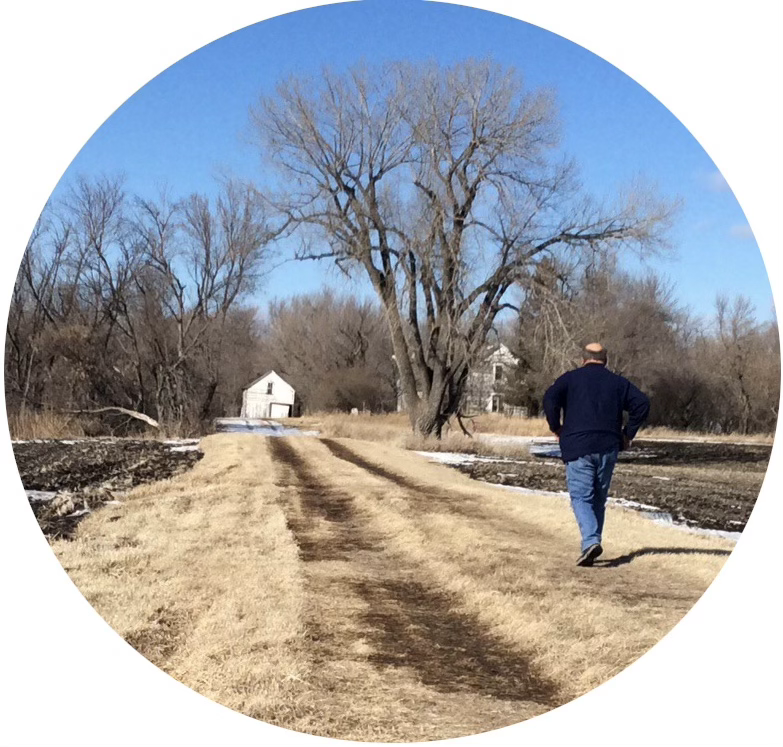
The picture is me walking up Grandpa’s driveway. You can’t see my face, which leaves you free to imagine that I might have a thoughtful expression. I appreciate the latitude 🤓
I like that picture. The lane leads somewhere in particular, but there’s no telling where a person’s mind might go along the way. Mine has had a good many years to learn the territory, and it still once in a while wanders off and has to be called home.
Perhaps something I read will get me started. Maybe a memory that doesn’t yet want to become a poem, or maybe some small absurdity that deserves a little company. I may simply have noticed something and want to ask whether you’ve noticed it, too. And once in a while I may actually, have something serious to say.
I don’t intend to establish a regular schedule for inspiration. It has shown very little respect for my arrangements in the past.
For now, I’m opening the door to see what comes through.
You’re welcome to come along. We’ll leave the weightier matters a little farther down the driveway. There’s no particular hurry, and I’d rather have a look around before we get there.
Mad Musings
Listen · Read by the author · 5:42
I’ve been thinking recently about a line I used to mutter to myself back when I was in high school: “Zealots of any stripe are anathema to freedom.”
Pretty much a mouthful for a kid. But I knew what “anathema” meant, and I haven’t found much reason to change my opinion.
Lately, watching the headlines and listening to campaign speeches and some of what passes for preaching, I find myself thinking “Holy buckets, the goddamn idiots are winning.”
I know that isn’t much of an argument, but it’s what slips out before I’ve had time to think.
Don’t get me wrong. I’m not anti-faith. I’ve spent most of my life drawn to the sacred, the mysterious, the unnameable current that seems to hum beneath the surface of things. I hear something of it in Bach. I’ve felt it standing knee deep in prairie grass listening to a meadowlark , or sitting quietly asking questions I couldn’t answer.
I don’t need anyone to call that God. I’m not always sure what to call it myself.
But I do need room to ask.
Reading Katherine Stewart’s Money, Lies, and God, I kept coming back to that distinction. What bothers me is how politicians and some religious leaders use faith to acquire political power—and then claim that their beliefs give them the right to dictate how everyone else should live. A person’s convictions can be entirely sincere. That doesn’t give him jurisdiction over my conscience.
I don't have a problem with someone telling me what sustains them. Hey, you never know, I might learn something. The trouble starts when “this is what I believe” becomes “this is what you will obey.”
And religious people don't have a monopoly on that maneuver. My old line was “zealots of any stripe.” I ought to remember the last three words, especially when somebody is saying something I happen to agree with.
Certainty is seductive. It saves us the inconvenience of having to think.
Those of us who are spiritually curious, cautiously irreverent, allergic to zealotry—we often keep quiet. We don’t want to sound like the people doing the shouting. We hold our questions like warm stones. We don’t want to throw them at anyone.
Besides, what would people think?
I understand hesitation. But I’m beginning to wonder how often I’ve mistaken reluctance for restraint. Are there times when keeping the peace means letting the loudest person in the room decide what peace is going to cost everybody else ?
An article I recently read about Hagia Sophia set me to thinking along those lines. What stayed with me was the image of a sacred building claimed and reclaimed by successive powers. I found myself wondering how much of that claiming had to do with reverence, and how much with possession.
I can’t answer for the people who stood there centuries ago, but I can ask the question of people claiming to speak for God now.
There’s something to be said for a room in which nobody requires an answer from you. A place to sit, to wonder, to grieve. It might be a church. It might be somewhere with no roof at all. What matters to me is that a person can enter it without having to surrender his questions at the door.
Those are the spaces I want to protect.
I’m aware that I can get a little self-righteous about righteousness. Calling people idiots ought to give me a clue. Anger can alert me to something that needs attention, but it doesn’t do the examining for me. I still have to ask what happened, who was harmed, and whether I’d object just as strongly if my own crowd had done it.
That last question can ruin an otherwise pretty darn nice day.
Still, doubt doesn’t require paralysis. I don’t have to understand every mystery in the universe before objecting to someone using the name of its supposed author to bully a neighbor.
So this is a letter to the quiet ones. To people whose faith leaves room for another person’s freedom. To people who have no religious faith at all, but know the value of wonder. To those who listen carefully and sometimes take so long finding the right words that the conversation has moved on without them.
I think we need to speak.
We can ask the unwelcome question. We can refuse to laugh along with cruelty. We can tell someone we care about, that we think they’re wrong, and stay long enough to hear their answer. And when belief is used to excuse coercion, we can say we will not consent to that.
None of that means we have to be certain about everything. It just means we have to take responsibility for what we do understand.
No, I don’t think the idiots have won. But I don’t think we can count on them getting tired and going home anytime soon, either.
Let them shout.
We’ll listen carefully. Then we’ll have our say.
The Land · Poem
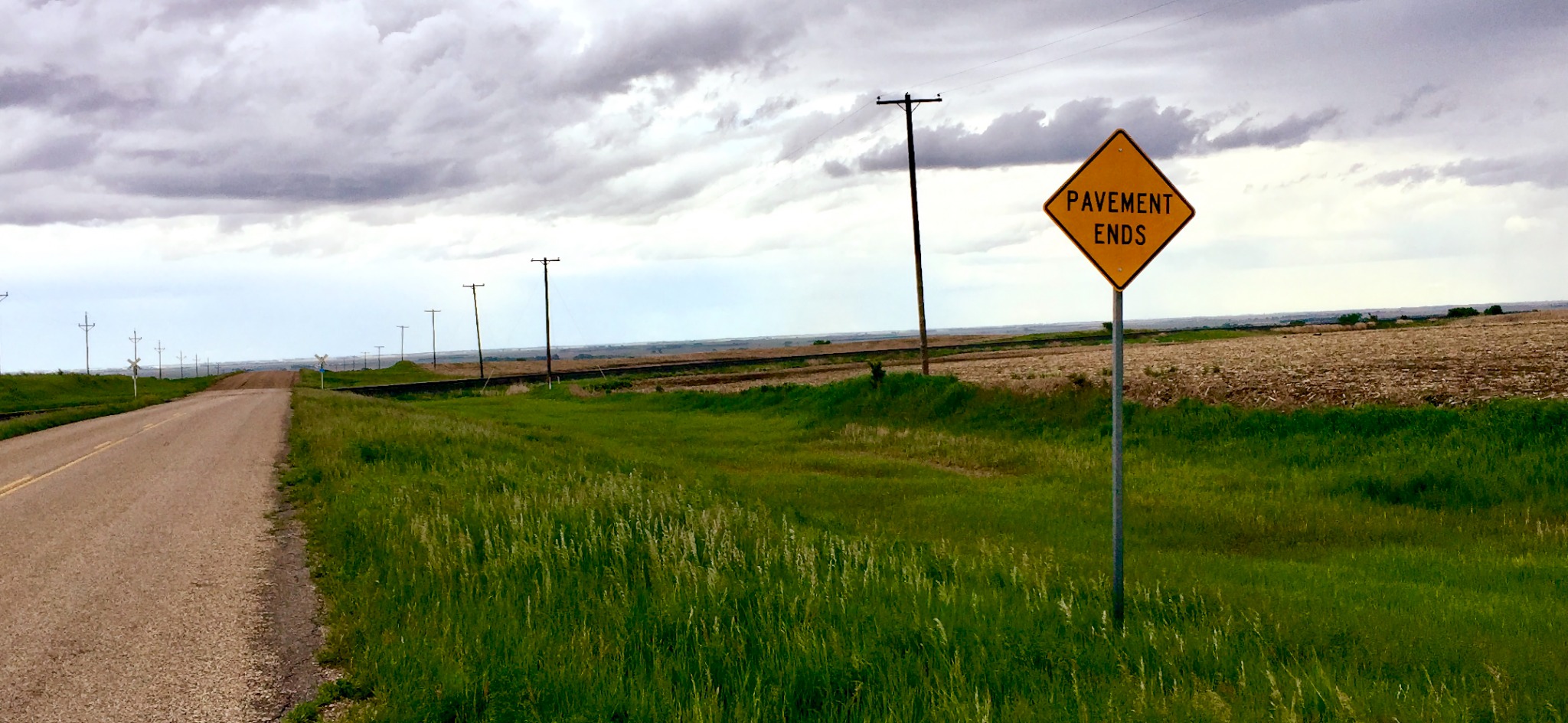
I’ve heard it said
the laws of physics don’t apply
out here.
Out here in my openness
Time just seems to flow
forth and back
Past and present
are the same
It is an icon
that openness
Broaching not
a compromise with sentiment
This ocean
filled with emptiness
is a seed
A seed that grows
into a million possibilities
It can be a dangerous place
to the uninitiated
But something happens here
The openness
The barrenness
The honesty and beauty
of the emptiness
are a poultice to my soul
They draw the poison out.
The Land · Poem
I doubt I could recall a time I didn’t notice it
that country school down the drive
that angles off the section road.
I doubt that I could count the times that I’ve passed by
seen the sun in afternoon
beat the windows into plates of burnished brass.
Make it seem as if it were alive again
lighted from within.
Built in nineteen hundred ten it was
three decades and a half
before ever I took breath.
By the time that I
was in grade three
they closed it down
that country school.
It feels it’s been a thousand years
the swings and slides and tilt around
rusted in the empty there.
I always feel…
the empty there.
If I press my nose against the window panes
peer beyond the grit and grime of time
peer beyond the wood perfume of pencil sharpenings
the dried up dust of pounded out erasers
and the rows of hooks
where coats and caps and scarves once hung.
I sometimes think
that I can hear the sounds of children’s voices
echo faintly through the empty there.
Been near a lifetime now
since last the school bell rang.
Almost I feel
as if I hear it’s sound
like someone rang it
in the empty there.
I always feel...
the empty there.